

Many groundbreaking trends are reshaping the landscape of data analysis, where staying ahead is crucial. In this informative blog post, you will discover the TOP 3 future trends to watch in data analysis that will impact how you work with data. Embrace the innovations to optimize your analysis and drive success in a data-driven world.
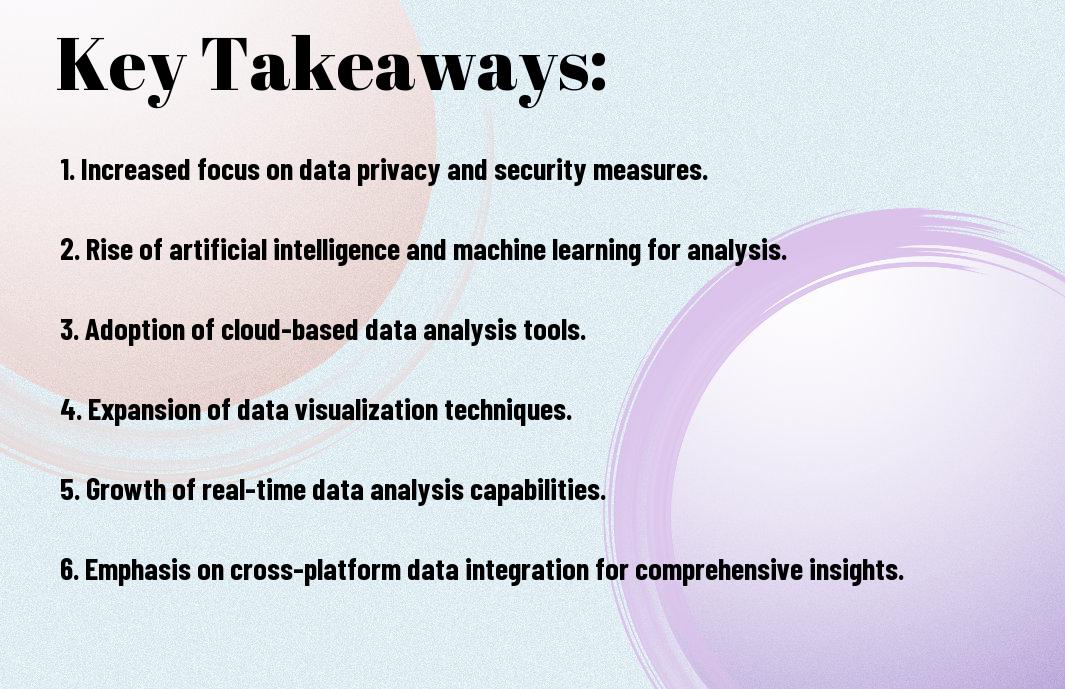
Key Takeaways:
- Increasing importance of Artificial Intelligence: AI is playing a crucial role in transforming data analysis by enabling faster and more accurate insights.
- Shift towards augmented analytics: The integration of AI and machine learning into analytics tools is empowering users to make data-driven decisions with ease.
- Rise of hybrid and multi-cloud data management: Companies are adopting hybrid and multi-cloud strategies to efficiently manage and analyze their data across different platforms.
- Focus on real-time data analytics: Organizations are prioritizing real-time data processing to gain instant insights and respond quickly to changing trends.
- Enhanced data governance and privacy measures: With increasing concerns about data privacy, companies are investing in robust governance frameworks to protect sensitive information.
- Innovations in data visualization: Advanced visualization tools are making it easier for users to interpret complex data sets and communicate insights effectively.
- Growth of edge computing: Edge computing is becoming more prevalent, enabling data analysis to be performed closer to the source of data generation for faster decision-making.
The Evolution of Data Analysis
Before submerging into the future of data analysis, it’s crucial to understand how far we’ve come. Data analysis has evolved significantly over the years, transitioning from a primarily descriptive approach to a more predictive and prescriptive one. This evolution has been driven by advancements in technology, analytical techniques, and a shift in how businesses and industries leverage data to make informed decisions.
From Descriptive to Predictive Analytics
One major shift in data analysis has been the move from descriptive to predictive analytics. Descriptive analytics focuses on summarizing historical data to understand what has happened in the past, providing valuable insights into trends and patterns. On the other hand, predictive analytics uses historical data, statistical algorithms, and machine learning techniques to identify the likelihood of future outcomes. By leveraging predictive analytics, businesses can make data-driven forecasts and anticipate potential trends, enabling them to proactively respond to challenges and opportunities.
With the advent of predictive analytics, businesses can move beyond simply understanding past performance to predicting future outcomes with a greater degree of accuracy. This shift has empowered organizations to optimize their operations, mitigate risks, and seize new opportunities in dynamic and competitive markets. By harnessing the power of predictive analytics, you can unlock valuable insights that drive better decision-making and strategic planning.
The Rise of Big Data and Its Implications
Data analysis has also been revolutionized by the rise of big data, which refers to the massive volume of structured and unstructured data generated by organizations on a daily basis. Big data presents both challenges and opportunities for businesses, as traditional data processing tools and techniques are often inadequate to handle the sheer volume, velocity, and variety of data generated. However, by embracing big data technologies such as Hadoop and cloud computing, organizations can extract valuable insights from vast datasets and gain a competitive edge in the market.
Descriptive analytics has been transformed by big data, allowing businesses to analyze large and diverse datasets to uncover hidden patterns, correlations, and trends. This newfound ability to extract insights from big data has revolutionized decision-making processes, enabling businesses to make more informed choices based on data-driven evidence. As you navigate the era of big data, embracing advanced analytics tools and technologies will be crucial to unlock the full potential of your data and drive innovation within your organization.
Artificial Intelligence and Machine Learning
How AI is Revolutionizing Data Analysis
Some of the most exciting advancements in data analysis are being driven by Artificial Intelligence (AI) and Machine Learning. With AI algorithms becoming more sophisticated, you can now uncover valuable insights from massive datasets in ways that were previously unimaginable. AI technologies can analyze complex data patterns, identify trends, and make predictions with a level of accuracy that surpasses traditional methods.
By leveraging AI in data analysis, you can automate time-consuming tasks, improve decision-making processes, and discover hidden opportunities that would have otherwise gone unnoticed. Whether you’re analyzing customer behavior, financial trends, or market dynamics, AI can help you extract actionable insights to drive your business forward and stay ahead of the competition.
Moreover, AI-powered data analysis tools are continuously learning and adapting to new information, enhancing their predictive capabilities and refining their recommendations over time. As you embrace AI in your data analysis processes, you’ll be able to make more informed decisions, optimize your strategies, and achieve greater success in your endeavors.
The Role of Machine Learning in Predictive Modeling
On the other hand, Machine Learning plays a crucial role in predictive modeling, allowing you to forecast future outcomes based on historical data. Machine Learning algorithms can detect patterns and relationships within your datasets, enabling you to make accurate predictions and smart decisions for your business.
Artificial intelligence is transforming the way we approach predictive modeling, empowering you to leverage vast amounts of data to anticipate trends, identify risks, and seize opportunities. By harnessing the power of Machine Learning, you can build robust predictive models that adapt to changing circumstances and deliver valuable insights to guide your strategic decisions.
Machine Learning algorithms can also help you optimize processes, improve efficiency, and drive innovation within your organization. By incorporating Machine Learning into your predictive modeling efforts, you can unlock new possibilities, drive growth, and achieve sustainable success in an increasingly competitive landscape.
Cloud Computing and Data Storage
The Shift to Cloud-Based Data Analysis
Keep up with the latest trends in data analysis by understanding the significance of cloud-based solutions. Businesses are increasingly moving towards cloud computing for data storage and analysis due to its cost-effectiveness, scalability, and accessibility. With the cloud, you can store and analyze vast amounts of data without being limited by physical storage space or processing power.
By shifting to the cloud for your data analysis needs, you can streamline your processes and make data-driven decisions more efficiently. The ability to access data from anywhere at any time allows for greater flexibility and collaboration among team members. Additionally, cloud-based solutions often provide better security measures to protect your valuable data from cyber threats.
Embracing cloud computing for data analysis enables you to stay ahead of the curve and adapt to the evolving technological landscape. As more businesses recognize the advantages of cloud-based solutions, investing in these technologies now will position you for future success in data analysis.
The Importance of Scalable Data Storage Solutions
Storage is a critical component of data analysis, and having a scalable data storage solution is crucial for handling the massive amounts of data generated today. Scalability allows you to expand your storage capacity as your data grows, ensuring that you can continue to analyze and derive insights from your data effectively.
With scalable data storage solutions, you can avoid constraints on storage capacity and performance, enabling you to process data more efficiently and derive valuable insights in real-time. This flexibility is crucial in today’s fast-paced business environment, where making timely decisions based on data can give you a competitive edge.
Cloud-based scalable data storage solutions offer the added benefit of cost-effectiveness and reliability. You can pay for the storage you need and scale up or down based on your requirements, eliminating the need for upfront investments in hardware or infrastructure. This pay-as-you-go model makes it easier for businesses of all sizes to leverage advanced data storage capabilities.
The Importance of Scalable Data Storage Solutions
Analysis of data is becoming increasingly complex and demanding, requiring robust storage solutions that can handle large volumes of data. Scalable data storage solutions play a crucial role in supporting advanced analytics and machine learning algorithms that require vast amounts of data to operate effectively. By investing in scalable storage solutions, you can ensure that your data analysis processes run smoothly and efficiently.
Real-Time Data Analysis
For Top 10 Data Analytics Trends You Must Know in 2024, real-time data analysis is one of the key trends shaping the future of data analytics. The ability to process and analyze data as it is generated is becoming increasingly crucial for businesses to stay competitive in today’s fast-paced environment. Real-time data analysis allows you to make quick, informed decisions based on up-to-the-minute information, giving you a significant edge over your competitors.
The Need for Speed in Data-Driven Decision Making
Need for speed in data-driven decision making has never been more critical. With the exponential growth of data being generated every second, organizations need to analyze and act on this data in real-time to seize opportunities and address challenges promptly. Real-time data analysis empowers you to respond swiftly to market trends, customer preferences, and operational issues. By harnessing the power of real-time data analysis, you can make agile decisions that drive your business forward.
Technologies Enabling Real-Time Data Analysis
Need for advanced technologies enabling real-time data analysis is evident. Technologies such as in-memory databases, stream processing platforms, and real-time analytics tools are revolutionizing how organizations extract insights from their data in real-time. These technologies allow you to process large volumes of data with low latency and high speed, enabling you to uncover valuable insights and trends instantaneously. By leveraging these cutting-edge technologies, you can elevate your data analysis capabilities and stay ahead of the curve in today’s data-driven world.
RealTime Data Analysis is a game-changer for businesses across industries. The ability to monitor, analyze, and act on data as it flows in provides you with a competitive advantage by enabling you to make informed decisions at the speed of business. By embracing real-time data analysis technologies, you can enhance your decision-making processes, optimize operations, and drive innovation within your organization. Stay ahead of the curve by incorporating real-time data analysis into your data strategy and unlock the full potential of your data assets.

Data Visualization and Storytelling
The Power of Visualizing Complex Data Insights
To effectively analyze and understand complex data sets, you need more than just numbers and figures. Visualizing data through charts, graphs, and interactive dashboards can help you uncover patterns, trends, and correlations that might otherwise go unnoticed. By representing data visually, you can easily identify outliers, compare different variables, and gain a deeper understanding of the underlying relationships within the data.
Complex data can be overwhelming, but with the right data visualization tools, you can simplify the information and communicate key insights more effectively. Through visualization, you can tell a story with your data, making it easier for others to grasp the significance of your findings. Whether it’s a simple bar chart or an interactive heat map, visual representations can help you make data-driven decisions and convey complex ideas in a compelling way.
Moreover, data visualization is not just about presenting the information—it’s also about exploring the data and discovering new insights. By interactively manipulating visualizations, you can dive deeper into the data, asking new questions and uncovering hidden patterns. This interactive approach to data analysis allows you to be more curious, more creative, and ultimately more effective in deriving meaningful insights from your data.
Effective Storytelling with Data
On top of visualizing data, you must also be able to effectively tell a story with the data you have uncovered. When you present findings to others, you need to go beyond just the numbers and provide context and meaning. Through effective storytelling, you can create a narrative that captivates your audience and conveys the significance of the data in a clear and engaging manner.
The power of storytelling lies in its ability to make complex data more relatable and memorable. By framing your insights within a compelling narrative, you can make an emotional connection with your audience and inspire them to take action based on your findings. Whether you are presenting to stakeholders, clients, or colleagues, the art of storytelling can help you communicate your data-driven insights persuasively and effectively.
Furthermore, effective storytelling with data is not just about presenting information—it’s also about influencing outcomes. By crafting a compelling narrative that resonates with your audience, you can drive decision-making and inspire change based on the insights you have uncovered. Through the power of storytelling, you can turn complex data into actionable intelligence that drives results and creates impact.
Edge Analytics and IoT
The Emergence of Edge Analytics
For the future of data analysis, Edge Analytics is an important trend to watch. This technology involves processing data near the source where it is generated, rather than sending it to a centralized data center. This can lead to faster insights and real-time decision-making, making it crucial for industries such as manufacturing, healthcare, and transportation.
The key benefit of edge analytics is its ability to reduce latency and minimize bandwidth usage. By analyzing data closer to where it is produced, you can improve operational efficiency and respond to critical events faster. This is especially important in scenarios where immediate action is necessary, such as in autonomous vehicles or industrial IoT applications.
However, while edge analytics offers many advantages, there are also challenges to consider. Managing distributed edge devices and ensuring data security can be complex tasks. As more devices are connected to the edge, data governance and privacy become increasingly critical, requiring careful management and robust strategies.
The Intersection of IoT and Data Analysis
The intersection of IoT and data analysis is reshaping industries and opening up new possibilities for innovation. By leveraging the vast amounts of data generated by IoT devices, organizations can gain valuable insights into their operations, customers, and markets. This data can be analyzed in real-time to optimize processes, predict maintenance needs, and enhance customer experiences.
With IoT devices becoming more prevalent in homes, cities, and workplaces, the amount of data being generated is growing exponentially. This data presents opportunities for organizations to gain a competitive edge and deliver personalized services to their customers. By combining IoT devices with advanced data analytics techniques, you can uncover patterns and trends that were previously hidden, enabling you to make informed decisions that drive business success.
However, as the volume and variety of IoT data continue to increase, so do the complexities of managing and analyzing it. Organizations need to invest in scalable infrastructure and advanced analytics capabilities to harness the full potential of IoT data. By staying ahead of these challenges and leveraging the power of IoT and data analysis, you can position your organization for future growth and innovation.
Edge is where the action is happening in the world of data analysis and IoT. By processing data at the edge of the network, organizations can benefit from real-time insights and faster decision-making. As IoT devices continue to proliferate, edge analytics will play a crucial role in unlocking the full potential of these devices and driving innovation across industries.

Cybersecurity and Data Privacy
Not Emerging Data Analytics Trends to Watch in 2024 and Beyond can you ignore the critical importance of cybersecurity and data privacy in data analysis. As the volume of data generated continues to grow exponentially, so do the risks associated with data security breaches and privacy violations. It’s crucial to stay vigilant and proactive in safeguarding your data against cyber threats.
The Growing Concerns of Data Security
Security should be at the forefront of your data analysis strategy. The growing sophistication of cyber-attacks means that traditional security measures may no longer be sufficient to protect your sensitive information. Hackers are constantly evolving their tactics, making it necessary for you to stay ahead of the curve by implementing robust cybersecurity measures. Failure to address these concerns adequately could lead to severe repercussions, including financial losses, damage to your reputation, and legal ramifications.
Therefore, it’s crucial that you invest in cutting-edge cybersecurity technologies and regularly update your security protocols to defend against the latest threats. Collaboration with cybersecurity experts and adherence to industry best practices can help you enhance the resilience of your data infrastructure and minimize the likelihood of security breaches.
Best Practices for Protecting Sensitive Data
Concerns surrounding data security highlight the importance of implementing best practices for protecting sensitive data. Encryption, access control, and regular security audits are necessary components of a robust data protection strategy. By encrypting your data both at rest and in transit, you can safeguard it from unauthorized access and maintain its confidentiality. Restricting access to sensitive information based on role-specific permissions can further reduce the risk of data exposure.
Understanding the value of your data and the potential consequences of a security breach can help you prioritize security measures effectively. By conducting regular risk assessments and staying informed about the latest cybersecurity trends, you can proactively identify and address vulnerabilities in your data environment. Keep in mind, the proactive protection of your data today can save you from costly repercussions in the future.

The Future Of Data Analysis – Trends To Watch
The Rise of NLP in Data Analysis
Rise above the data clutter and embrace the power of Natural Language Processing (NLP) in your data analysis journey. NLP leverages the ability of machines to understand, interpret, and generate human language, enabling you to extract valuable insights from unstructured text data. By incorporating NLP into your analytical toolkit, you can uncover hidden patterns, sentiments, and trends that were previously buried in vast amounts of text.
NLP algorithms are becoming increasingly sophisticated, allowing you to not only analyze text at scale but also to derive context and meaning from diverse sources such as social media, customer reviews, and research papers. With the rise of NLP, you can gain a deeper understanding of customer preferences, market trends, and competitive landscapes by tapping into the wealth of unstructured data that was once considered challenging to analyze.
Embracing NLP in your data analysis process can revolutionize the way you make decisions and drive innovation in your organization. By harnessing the power of NLP, you can transform unstructured text data into actionable insights, giving you a competitive edge in today’s data-driven landscape.
Unlocking Insights from Unstructured Data
To unleash the full potential of your data analysis efforts, you must master the art of unlocking insights from unstructured data. This type of data, which includes text, images, and videos, accounts for a significant portion of the information available to you. By applying advanced text analytics techniques, you can unravel valuable insights hidden within unstructured data sources.
Understanding the nuances and complexities of unstructured data is crucial for extracting meaningful insights that can drive strategic decision-making. By employing text analytics tools, you can sift through large volumes of text data, identify patterns, detect anomalies, and even predict future trends. This capability empowers you to make informed decisions based on a comprehensive analysis of both structured and unstructured data.
The Future Of Data Analysis – Trends To Watch
The Future of Autonomous Decision-Making
All data analysis is now moving towards autonomous systems that can make decisions without human intervention. In this new era, machines are becoming more sophisticated in their ability to process and interpret data, leading to faster and more accurate decision-making processes. Autonomous decision-making systems are reshaping industries by streamlining operations, reducing errors, and optimizing outcomes based on real-time data analysis. As these systems continue to evolve, they will revolutionize how businesses operate, making them more efficient and competitive in the ever-changing marketplace.
The Role of Humans in Autonomous Systems
Humans still hold a crucial role in overseeing and guiding autonomous systems. While machines are becoming more independent in their decision-making capabilities, human oversight is necessary to ensure ethical considerations, quality control, and intervene in complex situations that require human intuition and empathy. Collaborating with autonomous systems allows humans to focus on higher-level tasks that require creativity and critical thinking, ultimately driving innovation and progress in various industries.
Understanding the balance between human oversight and machine autonomy is key to maximizing the potential of autonomous systems. By leveraging the strengths of both humans and machines, organizations can harness the power of data analysis to make informed decisions and drive sustainable growth. Embracing this partnership between humans and autonomous systems will lead to more efficient processes, innovative problem-solving, and enhanced decision-making capabilities across all sectors.
Quantum Computing and Data Analysis
The Potential of Quantum Computing in Data Analysis
After years of research and development, quantum computing is emerging as a revolutionary technology with the potential to transform the field of data analysis. Traditional computers operate using bits, which can represent either a 0 or a 1. In contrast, quantum computers use quantum bits or qubits, which can exist in multiple states simultaneously due to the principles of superposition and entanglement. This allows quantum computers to perform complex calculations much faster than classical computers, making them exceptionally well-suited for handling massive datasets and solving intricate data analysis problems.
Early Applications and Implications
Potential aside, quantum computing has already started to demonstrate its capabilities in data analysis. Early applications include optimization problems, cryptography, and machine learning. Quantum algorithms have shown the potential to break current encryption methods, posing a significant security threat that needs to be addressed. Moreover, quantum machine learning algorithms, such as quantum neural networks, have the ability to process and analyze vast amounts of data in ways that classical machine learning algorithms cannot. These early implications underscore the transformative power of quantum computing in data analysis.
For instance, quantum computing could revolutionize drug discovery by quickly analyzing and simulating molecular interactions to identify new compounds and potential treatments. This accelerated process could lead to breakthroughs in medicine and healthcare, saving countless lives. Additionally, financial institutions could benefit from quantum computing’s ability to quickly analyze market trends and make complex predictions, enabling them to make more informed decisions and stay ahead of the competition.
Blockchain and Distributed Ledger Technology
The Impact of Blockchain on Data Analysis
Unlike traditional databases, Blockchain technology offers a decentralized and transparent way to store data. By utilizing cryptographic principles, each block of data is linked to the previous one, creating a secure and immutable chain of information. This not only ensures the integrity of the data but also enhances trust among parties involved in data analysis. With Blockchain, you can have confidence in the accuracy and reliability of the information you are analyzing.
Transparency and Security in Data Sharing
Analysis shows that Blockchain technology promotes transparency and security in data sharing. Every transaction is recorded on a distributed ledger that is accessible to all parties involved, reducing the risk of fraud and manipulation. This high level of transparency not only fosters trust but also streamlines the process of data analysis by providing a clear and auditable trail of information. You can rest assured that the data you are using is authentic and has not been tampered with.
Impact: The integration of Blockchain technology in data analysis has a profound impact on how we handle and interpret information. The increased transparency and security offered by Blockchain not only revolutionize data sharing practices but also pave the way for more reliable and trustworthy analysis. Embracing Blockchain technology in your data processes can elevate the quality and credibility of your insights, ensuring that you make informed decisions based on accurate data.
Human-Computer Interaction and Data Analysis
Designing Intuitive Interfaces for Data Analysis
For your data analysis processes to be efficient and effective, it is crucial to have intuitive interfaces that allow you to interact seamlessly with the data. Designing interfaces that are user-friendly and visually appealing can significantly enhance the way you explore and analyze data. Intuitive interfaces should enable you to easily navigate through datasets, apply filters, and visualize results in a clear and understandable format.
The Importance of User Experience in Data Tools
User experience plays a critical role in how you interact with data tools. A positive user experience can lead to increased productivity, better decision-making, and overall satisfaction with the data analysis process. Data tools that prioritize user experience are more likely to be adopted and utilized effectively, ultimately improving the quality of insights derived from the data.
Tools that offer a seamless and enjoyable user experience can empower you to examine deeper into your data, uncovering hidden patterns and trends that might have otherwise gone unnoticed. By placing emphasis on user experience, data analysis tools can become powerful allies in your quest for valuable insights and meaningful outcomes.
Ethics and Bias in Data Analysis
Once again, as you explore into data analysis, you must confront the crucial issues of ethics and bias.
The Dangers of Bias in Data-Driven Decision Making
The importance of recognizing and addressing bias in your data analysis cannot be overstated. Bias can creep into your data through various means, such as sample selection, data collection methods, or even preconceived notions. If left unchecked, bias can lead to flawed insights and ultimately result in poor decision-making.
It’s imperative to understand that data-driven decision making is only as good as the data it relies on. If that data is biased, the conclusions drawn from it will be inherently flawed. This can have serious consequences, ranging from unjust practices to financial losses. As you navigate the world of data analysis, it is crucial to remain vigilant, constantly questioning your assumptions, and actively seeking out and mitigating bias in your datasets.
Strategies for Ensuring Ethical Data Analysis
The ethical implications of data analysis are vast, and it’s crucial to adopt strategies that promote fairness, transparency, and accountability in your work. One key strategy is to ensure diversity in your data sources, which can help mitigate bias and provide a more comprehensive view of the subject at hand. Additionally, implementing regular audits of your data analysis processes can help uncover and address any potential ethical issues before they escalate.
Analysis shows that incorporating ethics into every step of your data analysis process is imperative for maintaining integrity and trust in your findings. By prioritizing ethical practices, you not only uphold the values of fairness and equality but also ensure that your conclusions are based on reliable and unbiased data.
To wrap up
Considering all points discussed in “The Future Of Data Analysis – Trends To Watch,” it is clear that the landscape of data analysis is evolving rapidly, with new technologies and methodologies constantly emerging. As you navigate this ever-changing field, it is crucial to stay informed and adaptable to capitalize on the opportunities presented by these trends. By understanding the importance of artificial intelligence, machine learning, and data visualization, you can enhance your data analysis skills and stay ahead in this competitive industry.
Furthermore, the increasing focus on data privacy and ethics highlights the importance of responsible data handling and decision-making. As you incorporate these considerations into your data analysis practices, you can build trust with your stakeholders and contribute to a more ethical and sustainable data-driven world. Embracing the power of big data and predictive analytics can unlock valuable insights and drive innovation in your organization, ultimately leading to improved decision-making and business outcomes. It is important to leverage these trends effectively to harness the full potential of data analysis in the future.
In a nutshell, the future of data analysis holds immense possibilities for those who are willing to adapt, learn, and innovate. By staying attuned to the trends outlined in this article and honing your skills in data analysis, you can position yourself for success in this dynamic and exciting field. Bear in mind, the future is in your hands, and the potential of data analysis is limited only by your imagination and willingness to explore new horizons. So, embrace these trends, stay curious, and commence on a journey of endless possibilities in the world of data analysis.