

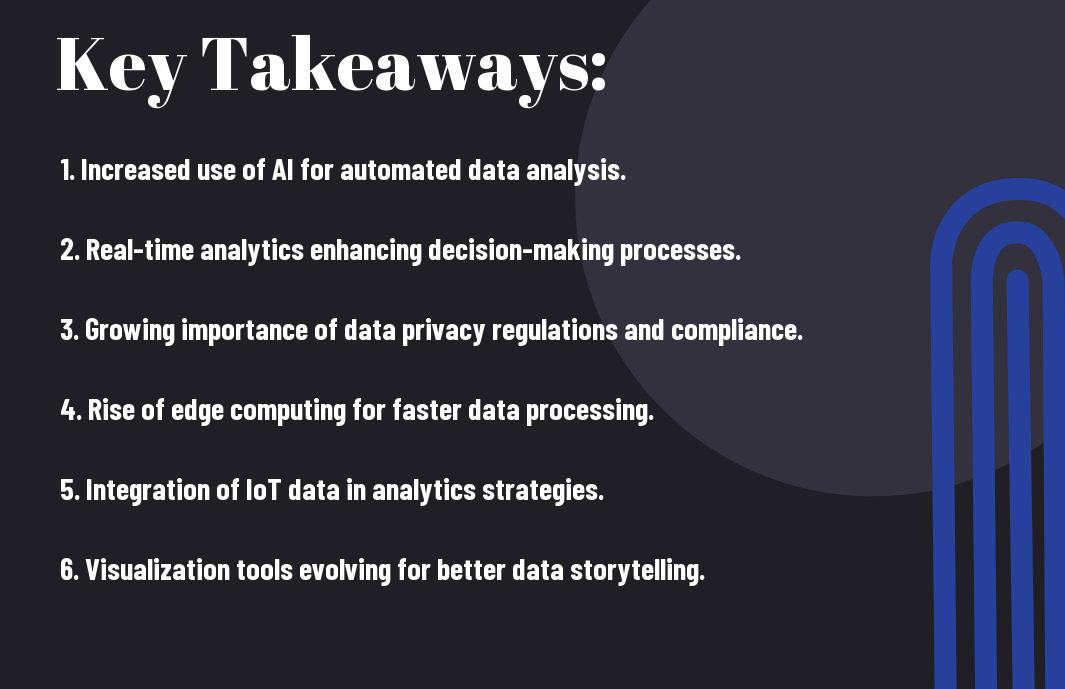
Data is evolving at an unprecedented pace, transforming how you interpret and utilize information in your decision-making processes. As we explore into the future of data analytics, you’ll discover groundbreaking trends and innovations that promise to shape the landscape of this dynamic field. From artificial intelligence enhancements to the rise of real-time analytics, you’ll find insights that not only highlight where data is headed but also how you can leverage these advancements to gain a competitive edge. Prepare to rethink your approach as we explore the exciting developments that await.
The Evolution of Data Analytics
From Descriptive to Predictive Analytics
The world of data analytics has undergone a remarkable transformation over the past few decades, reflecting the rapid technological advancements and the ever-increasing need for actionable insights. On this journey, you might have noticed how the focus has shifted from merely reporting what has happened to predicting what might happen in the future. Descriptive analytics, which primarily deals with summarizing past data, has laid the groundwork for more sophisticated approaches. You’ve probably encountered dashboards filled with graphs and metrics that provide you with insights, effectively painting a picture of historical performance. This foundation is important, but it only scratches the surface of what data can truly achieve.
As you dive deeper into analytics, you’ll find predictive analytics taking center stage. On a broader scale, this form of analysis relies on statistical algorithms and machine learning techniques to identify patterns within data, allowing you to forecast future outcomes. Imagine a world where businesses can anticipate customer needs, optimize supply chain operations, and even mitigate risks proactively. Your understanding of customer behavior and market dynamics becomes sharper, enabling strategic planning with a forward-thinking mindset. Predictive analytics empowers you to make decisions based not only on what has happened but on what is most likely to unfold in the future, thus helping you to stay ahead of the curve.
As you consider your own approach to data analytics, it’s crucial to recognize the evolution from descriptive to predictive analytics as a significant milestone in the field. On this journey, you encounter myriad tools and technologies that enhance your analytical capabilities. This evolution doesn’t stop here, as the landscape continues to expand with new innovative methodologies that include prescriptive analytics, which goes a step further by recommending actions based on predicted outcomes. By embracing these advancements, you elevate your analytical prowess, transforming data from mere numbers into a source of strategic advantage in your personal and professional endeavors.
The Rise of Big Data and Its Implications
With the dawn of the digital age, we’re witnessing an extraordinary surge in the amount of data generated every second. This phenomenon, often referred to as big data, encapsulates the vast diversity, velocity, and volume of data being created daily. As you navigate your way through this landscape, you’ll begin to appreciate the rich opportunities that big data presents for deeper insights and more meaningful decision-making. The implications are profound, not just for businesses but for individuals and society as a whole. The ability to harness and analyze big data means you can extract actionable insights that were previously unimaginable, transforming sectors like healthcare, finance, retail, and beyond.
Moreover, as you explore the intricacies of big data, you’ll appreciate the challenges that accompany its rise. With great power comes great responsibility, and managing such expansive datasets requires not only cutting-edge technology but also robust frameworks for data governance and ethics. Understanding how to deal with issues such as data privacy, security, and compliance becomes imperative for anyone looking to leverage big data effectively. You will not only learn how to interpret the vast amounts of information available but also navigate the ethical landscape that defines its usage in today’s data-driven world.
For instance, consider the healthcare industry, where big data analytics is revolutionizing patient care and treatment outcomes. By analyzing large datasets of patient records, medical histories, and treatment responses, your understanding of health trends and patterns becomes clearer. This leads to personalized treatment plans, quicker diagnoses, and ultimately, saving lives. Moreover, this direct application of big data analytics underscores the transformative potential that exists across various sectors, giving you a glimpse into a future where data-driven decisions are the norm rather than the exception.
Artificial Intelligence and Machine Learning
AI-Driven Insights and Automation
Insights generated by Artificial Intelligence (AI) are transforming the landscape of data analytics. Assuming you have a wealth of data at your fingertips, the ability of AI to sift through complex datasets and identify patterns in real time is revolutionizing decision-making processes. This means you can harness AI to deliver action-oriented insights that were previously hidden beneath layers of data. In an age where time is money, the agility provided by AI-driven analytics tools enables organizations to respond swiftly to emerging trends and operational challenges. Imagine the competitive edge you would have with the capability to derive meaningful insights almost instantly.
The automation aspect of AI is another cornerstone of its functionality in data analytics. Assuming you find yourself overwhelmed with repetitive tasks like data entry, cleansing, and preliminary analysis, AI can efficiently automate these processes, allowing you to focus on higher-level strategic planning and innovation. By streamlining mundane tasks, AI not only increases efficiency but also reduces the probability of human error. As a result, operations can become more seamless, and you’ll find that your team can devote valuable time to tasks that involve creative thinking and complex problem-solving.
Ultimately, AI-driven insights and automation serve as catalysts for faster, better-informed business decisions. You no longer need to dig through spreadsheets or waste hours compiling reports. Instead, intelligent algorithms can process enormous amounts of data, extracting raw numbers and translating them into actionable insights. In essence, you will have a personal advisor constantly analyzing markets, customer preferences, and operational efficiencies through an AI lens, enabling you to stay ahead in a rapidly changing business environment.
ML-Based Models for Advanced Analytics
Automation isn’t the only game-changer. When you investigate into Machine Learning (ML)-based models, you tap into the advanced analytics capabilities that can redefine the way you approach complex business problems. Understanding that ML algorithms can adapt and improve over time means that the solutions you deploy are not static but rather dynamic, evolving as new data comes in. With this adaptability, your predictive capabilities can become exceptionally precise, allowing you to forecast trends and behaviors with striking accuracy.
As you leverage ML-based models, you can expect to uncover nuanced insights that traditional analytics cannot provide. For instance, by implementing models that analyze customer data in real time, you can personalize marketing efforts or improve customer service tailored to individual needs. Imagine being able to predict consumer behavior based on historical data and trends, thus enhancing customer satisfaction and loyalty. By effectively segmenting your audience through advanced ML algorithms, your engagement strategies will be more targeted and efficient.
Additionally, the power of ML-based models in predicting operational efficiencies cannot be overstated. With the capability to analyze various metrics simultaneously, you’ll start identifying optimization opportunities in processes you may not have previously considered. As your models learn from new data, they continuously enhance their accuracy, providing you with an ever-growing pool of insights that are crucial for strategic decision-making.
- Increased accuracy in forecasting.
- Data-driven insights for personalized marketing.
- Enhanced operational efficiencies through predictive analysis.
| Benefit | Description |
|---|---|
| Predictive Power | Ability to anticipate trends and customer behaviors with remarkable accuracy. |
| Adapts to Change | Models continually improve as they receive new data inputs, maintaining relevance. |
Understanding the intricacies of ML models allows you to see how crucial they are for advanced analytics efforts today. As you incorporate these models into your analytics strategy, you’ll likely find that not only do they enhance your ability to make informed decisions but also reduce risks associated with uncertainty. The quicker and more accurately you can analyze operational performance, market dynamics, and customer preferences, the more poised you’ll be to seize opportunities that propel your business forward.
- Ability to draw nuanced insights from vast data pools.
- Facilitating targeted marketing strategies for better engagement.
- Discovering optimization opportunities in core operations.
| Impact | Description |
|---|---|
| Enhanced Decision-Making | Utilizing deep data insights to inform strategic choices. |
| Customer Retention | Improving customer satisfaction through personalized experiences. |
Cloud Computing and Data Storage
For businesses looking to thrive in the fast-paced world of data analytics, embracing cloud computing is no longer optional; it’s imperative. The cloud has transformed how organizations store and analyze vast amounts of data, offering unparalleled scalability and flexibility. Imagine having the ability to scale your storage capabilities up or down as needed, really allowing your organization to respond dynamically to changes in data volume. This flexibility means you can handle unexpected surges in data usage, ensuring that your analytics operations run smoothly without the immediate worry of infrastructure limitations. Cloud computing offers an agile solution that adapts to your requirements, which is increasingly vital in our data-driven age.
Scalability and Flexibility in the Cloud
Cloud architecture allows for seamless scalability, which is crucial for remaining competitive in today’s market. As your data needs evolve, cloud platforms provide the resources to grow right alongside your company. You may find yourself needing more storage power during quarterly reports, big marketing pushes, or major projects. With cloud services, you’re not locked into a fixed amount of data storage; instead, you can increase or decrease your capacity based on real-time demands. This allows you to allocate resources more efficiently, reducing waste and ensuring that you’re only paying for what you truly need.
Moreover, the flexibility of cloud computing enables you to explore innovative data analytics strategies without the burden of heavy upfront investments in hardware. You can pivot quickly and test new analytics approaches with less risk. This nimbleness is crucial, especially when analyzing new datasets or when trialing the latest data analysis tools on the market. You have the freedom to experiment and refine your methodologies without the lengthy delays that traditional infrastructure might impose. Thus, the cloud empowers your organization to adopt a more exploratory and adaptive approach to data analytics.
Finally, as businesses become increasingly remote and decentralized, the collaborative power of cloud computing cannot be overstated. Teams can access and analyze data from anywhere, enabling your workforce to share insights and make decisions in real time. This remote accessibility expands your workforce’s potential, creating a culture of innovation and collaboration that might not be feasible with traditional storage methods. It’s no longer just about analyzing data; it’s about fostering a community of data-driven decision-makers who can draw insights from your analytics, regardless of their physical location.
Data Lakes and Warehouses: Storing and Managing Big Data
Lakes and warehouses both play crucial roles in how businesses manage their big data needs. While data warehouses are structured environments where data is cleaned and organized, data lakes offer a more flexible solution, where data can be stored in its raw format. This flexibility means that you can pull in various forms of data – structured, unstructured, and semi-structured – without the constraints of predefined schemas. The advantage of this approach is significant: it allows you to capture and store all relevant data that could be valuable for future analytics, without the need to filter it immediately. As your analytics capabilities mature, you can then curate and structure the data that’s most pertinent, ensuring that you are making the most of your assets.
Cloud solutions are at the forefront of this evolution in data storage. The cloud not only provides the scalability that your organization might need when initiateing on ambitious data projects but also offers the capabilities to manage and maintain sophisticated data lakes and warehouses. With cloud technology, you can implement robust security measures and gain access to advanced analytics tools that allow you to explore your data like never before. As you navigate the complexities of big data, the combination of cloud computing and intelligent storage solutions will empower you to bring forward actionable insights that can drive your business forward.
The Internet of Things (IoT) and Edge Analytics
Unlike traditional data collection methods that often rely on centralized servers, the Internet of Things (IoT) introduces a sprawling network of interconnected devices that continuously generate data. This decentralized approach transforms the landscape of data analytics, creating opportunities for unprecedented levels of real-time insights. Everyday objects—from your smart thermostat to industrial machinery—are now equipped with sensors that track a myriad of metrics, such as temperature, humidity, and performance levels. The convenience of having these sensors embedded into the things we use daily enriches your data ecosystem, enabling you to gather game-changing information as events unfold rather than waiting for standardized reports that lag behind.
IoT Devices and Real-Time Data Generation
Things have come a long way since the early days of computing, where data was limited and often collected manually. Today, IoT devices proliferate in both personal and business environments, creating a complex web of data streams that are continuously active. These devices collect and transmit data at regular intervals, generating a vast amount of information that can be leveraged for analytical purposes. For example, smart home devices notify you of changes in energy consumption and can even alert you to potential security breaches before you realize anything is amiss. This level of continuous data generation means that you are no longer making decisions based on static reports but rather tapping into a real-time reservoir of insights that shape your understanding of the moments as they happen.
The implications of this shift are monumental. With the ability to harness real-time data, businesses can stay agile. Imagine how a retail company can optimize inventory levels based on shopping trends detected in real time, or how healthcare providers can monitor patients remotely, adjusting treatments instantly as various metrics fluctuate. The availability of vast datasets from IoT devices enables predictive analytics, allowing you to anticipate needs and challenges before they arise. Not only does this enhance efficiency, but it also dramatically improves customer service and satisfaction. By embracing the flow of real-time data generation through IoT devices, you position yourself and your organization at the forefront of data-driven decision-making.
Edge Analytics for Faster Decision-Making
Devices themselves are becoming increasingly sophisticated, with significant computational power located right at the edge of the network. Edge analytics takes data processing closer to the source, allowing insights to be derived immediately rather than sending all data to a centralized hub for analysis. This approach minimizes latency, which is critical in situations where timing is everything, such as in autonomous vehicle navigation systems or factory automation. By processing data on-site, you unlock the capability to make faster, more informed decisions that directly impact ongoing operations, all while reducing bandwidth usage and enhancing security.
Edge analytics represents a pivotal move away from bulky, centralized data warehouses by distributing computational tasks across the network. The agility that comes with handling data at the edge means that you can seize opportunities and mitigate risks in real-time. In scenarios such as smart cities, for instance, traffic patterns can be monitored continuously, and adjustments made instantaneously, optimizing flow and reducing congestion. This is a significant leap forward—moving beyond merely analyzing data to taking intelligent action based on insights derived right at the source. The evolution towards IoT and edge analytics isn’t just a technological advancement; it is fundamentally changing how you engage with data, drive efficiencies, and foster innovation in your operations.
Blockchain and Data Security
All eyes are turning towards the transformative power of blockchain technology, particularly in the sphere of data security. As concerns over data breaches and unauthorized access continue to rise, blockchain offers unparalleled solutions that can revolutionize secure data sharing and collaboration among organizations. In a world where the sharing of sensitive information is commonplace, you must ensure that data integrity and privacy are at the forefront of your operations. By leveraging blockchain’s decentralized architecture, you can create an environment where data is not only secure but also easily accessible to authorized parties, thereby fostering collaboration while mitigating risks.
Secure Data Sharing and Collaboration
Security remains a paramount concern when you’re dealing with shared data across multiple stakeholders. Traditional systems often rely on a central database, making them vulnerable to breaches and manipulations. However, with blockchain technology, security is inherently enhanced through its cryptographic nature and immutable records. Each participant in the blockchain network has access to a synchronized version of the data, meaning that any alterations must be agreed upon by the majority of nodes in the network. This consensus mechanism effectively makes it extraordinarily challenging for any single entity to manipulate the data without detection, providing you with a higher level of trust in your collaborative efforts.
Moreover, blockchain enables you to grant access rights selectively, allowing you to specify who can view or interact with the data. This fine-grained control not only ensures that sensitive information remains confidential but also builds confidence among the parties involved in data-sharing initiatives. Imagine the possibilities: your operations can streamline processes such as contract management, regulatory compliance, or even joint ventures without the constant fear of leaks or fraud. Every transaction is logged as a secure entry on the blockchain, providing a detailed and indisputable audit trail that can be critical in dispute resolution or compliance audits.
As you contemplate your organization’s data strategy, integrating blockchain for secure data sharing represents a vital step forward. This innovative approach allows you to share insights and resources without compromising on security, effectively redefining how you interact with partners, clients, and stakeholders. As technology further evolves, aligning with blockchain’s principles can help you differentiate your business in a competitive landscape while ensuring the highest standards of data integrity and confidentiality.
Blockchain-Based Data Validation and Verification
Validation is the cornerstone of any reliable data analytics framework. In an age where bad data can lead to poor decision-making, you need systems that inherently support data accuracy and authenticity. Blockchain technology provides an avenue for establishing trust through its decentralized and immutable nature. When data is entered into the blockchain, it is timestamped and encrypted, creating a verifiable log that assures you of its validity. This immutable ledger means that once data is recorded, it cannot be tampered with, effectively increasing your confidence in the data being analyzed.
Moreover, blockchain-based systems facilitate real-time validation and verification, which can be transformative for industries that rely heavily on accurate and timely data, such as finance or healthcare. You can efficiently track the origin of data—from its creation point to its current state—allowing you to audit its journey throughout its lifecycle. By employing smart contracts, self-executing protocols are triggered based on predetermined conditions, automatically confirming the accuracy and reliability of the data as it flows through different stages of your operations.
Data transparency is further enhanced by blockchain, as you can offer your partners and clients visibility into the data’s journey, creating an environment of accountability that goes beyond mere assurances. This adherence to authenticity and accuracy not only strengthens your reputation but can also deliver competitive advantages in markets where data-driven decisions are critical. As you venture into deeper layers of analytics, blockchain’s robust validation mechanisms will work hand in hand with your strategies, ensuring that you always have the right data at your fingertips.
Natural Language Processing (NLP) and Text Analytics
Keep in mind that the surge in digital data production is not just confined to numbers and structured information; a significant portion comes from unstructured data sources such as emails, social media posts, customer reviews, and other textual content. This wealth of unstructured information holds invaluable insights that, until recently, remained largely untapped. The advent of Natural Language Processing (NLP) and text analytics has transformed how you can harness this data, empowering you to unlock insights and make informed decisions based on the sentiments and opinions expressed in real-time. As you probe the world of NLP, imagine drawing on user-generated content to not only enhance product offerings but also to tailor customer experiences like never before.
Unlocking Insights from Unstructured Data
Unstructured data is often likened to an untamed wilderness; it contains myriad paths to discovery but can also lead to confusion without the appropriate tools. However, with NLP, you can engage with this text-heavy landscape in an organized manner. NLP equips you with capabilities to interpret and analyze the nuances of human language, allowing for sentiment analysis, topic modeling, and entity recognition. For example, if you monitor social media chatter about your brand, you can detect prevailing sentiments, identify potential reputational risks, and uncover emerging trends—all made possible by the insightful processing power of NLP algorithms.
Furthermore, as you explore these insights, you can utilize text analytics to establish key performance indicators (KPIs) derived from the analysis. By aggregating data from unstructured sources, you can paint a more comprehensive picture of customer behavior and preferences. In essence, analyzing unstructured data is about transforming chaotic text into a symphony of actionable insights, thus enabling you to back your strategies with robust evidence drawn from the voices of your customers.
As you begin to tap into NLP and text analytics, you may encounter challenges, such as understanding the context and emotions behind words or phrases. Nevertheless, advancements in machine learning and deep learning techniques are continually improving sentiment analysis and language processing capabilities. Consequently, NLP is poised to play a transformative role in your data analytics endeavors, creating a bridge between raw unstructured content and strategic decision-making.
NLP-Driven Chatbots and Virtual Assistants
Language is the essence of communication, and in a digital age where consumer expectations are rapidly evolving, timely and relevant interaction is more critical than ever. NLP-driven chatbots and virtual assistants have emerged as invaluable tools that can understand and respond to natural human language with remarkable efficiency. As you integrate these technologies into your customer service framework, you can provide 24/7 support, handle numerous inquiries simultaneously, and learn from each interaction to improve future engagements. This scalability means that your users enjoy a smoother interface, while you benefit from streamlined operational processes.
Text analysis enhances the functionality of these chatbots by feeding them with the contextual understanding needed to decipher complex questions and provide accurate answers. Advances in NLP enable chatbots not only to recognize specific phrases but also to interpret the intent behind user queries. This creates a more personalized experience for your customers, who are likely to feel more connected to your brand when they receive responses that genuinely address their needs. The continuous refinement of NLP models ensures that these chatbots evolve with changing language usage, allowing you to maintain relevance in an ever-shifting marketplace.
Text-based interactions through chatbots also present a unique opportunity for data collection. Each conversation becomes a point of insight, offering you a treasure trove of data regarding consumer preferences, pain points, and behavior. As your virtual assistants engage with users, the information garnered can be analyzed to inform marketing strategies, enhance product development, and fine-tune customer service approaches. Leveraging this data ensures that you remain one step ahead of the competition, turning conversations into valuable insights and actions.

Real-Time Analytics and Streaming Data
Now, as you probe into real-time analytics and streaming data, it’s crucial to recognize the landscape’s dynamic and fast-paced nature. The concept of processing and analyzing high-velocity data is not merely an academic exercise; it’s increasingly becoming a foundational component of modern business strategies. With the proliferation of Internet of Things (IoT) devices and an ever-rising tide of data sources, organizations can now harness vast amounts of information almost instantaneously. By employing sophisticated algorithms and lightning-fast computational capabilities, you can turn streams of data—ranging from social media interactions to sensor readings—into actionable insights that inform decision-making in real time.
Processing and Analyzing High-Velocity Data
Any forward-thinking business must appreciate the importance of high-velocity data processing. This isn’t just about receiving data quickly; it’s about creating a system that can digest and analyze this data to provide insights that are relevant and timely. As the speed of data generation accelerates, traditional batch processing methods become inadequate. You’ll find that contemporary solutions favor stream processing engines, which allow for continuous input, real-time computation, and immediate output. Think of how you would benefit from monitoring social media sentiment about your brand as it changes throughout the day, or how your supply chain could optimize its operations dynamically based on real-time shipments and inventory levels.
Furthermore, the tools and technologies available for handling high-velocity data are evolving at an unprecedented pace. Frameworks like Apache Kafka and Apache Flink allow for the efficient processing of large volumes of streaming data, enabling you to harness insights that were once reserved for slow, retrospective analyses. The focus now shifts towards constructing architectures that not only manage data inflow but also ensure data quality and relevance. By utilizing these technologies, you position your team to respond to emerging trends swiftly, maintain a competitive edge, and cater to the real-time needs of your clientele.
To put it briefly, mastering the art of processing and analyzing high-velocity data equips you with a robust advantage in today’s fast-evolving marketplace. You’ll be poised to not just keep up with the rapid flows of data but to glean profound insights almost immediately, adjusting your strategies on-the-fly as market demands shift.
Real-Time Decision-Making and Alert Systems
Any organization that thrives on data must embrace the capabilities of real-time decision-making and alert systems. This new frontier of analytics transforms the way you approach problem-solving and strategy execution. By setting up a framework where data flows continuously into algorithms designed to detect patterns and anomalies, you can deploy automated systems that facilitate immediate responses to emerging situations. This does not merely enhance efficiency; it elevates the role of data from being a historical record to an active player in your operational strategy. Imagine the possibilities when your systems can alert you to potential issues in your supply chain as they occur, empowering you to make crucial decisions while situations are still malleable.
Moreover, integrating these real-time systems with popular messaging and collaborative tools can ensure that the right people within your organization are notified as soon as an event warrants attention. Real-time alerts enable proactive management, allowing your team to respond to crises or capitalize on opportunities instantly. For instance, you can be informed if a sudden surge in web traffic indicates a viral marketing success, prompting your marketing team to reinforce campaigns at key moments. The agility that real-time decision-making introduces into your operations is nothing short of revolutionary.
Data analytics tools that support real-time decision-making are increasingly sophisticated, providing you with multi-layered alerts that enhance your awareness of various operational metrics—be it financial performance, customer sentiment, or product reliability. As data continues to be the lifeblood of business in the digital age, it’s vital to ensure that your alert systems are not only responsive but also insightful, allowing you to maintain your edge in a competitive landscape.
Augmented Analytics and Automation
To fully grasp the potential of data analytics in the coming years, it’s crucial to explore how augmented analytics and automation are shaping the landscape. With the emergence of advanced technologies, you’re stepping into a realm where data is not just analyzed but also interpreted in ways that were previously unimaginable. One of the cornerstones of this evolution is Artificial Intelligence (AI), which plays a pivotal role in simplifying the analytics process, allowing you to uncover actionable insights more rapidly than ever before.
Simplifying Analytics with AI-Driven Tools
Tools powered by AI are revolutionizing the way you approach data analysis. Imagine a scenario where complex datasets are sifted through automatically, allowing you to focus on strategic decision-making rather than getting lost in figures and spreadsheets. With AI-driven tools, the heavy lifting of data preparation, visualization, and interpretation is handled with precision and efficiency. This means you can derive insights that might have taken weeks or even months in mere hours, thus accelerating the entire analytics process.
Furthermore, these tools are designed to be user-friendly, making them accessible even to those without a technical background. As a user, you can engage directly with intuitive interfaces that demystify analytics, eliminating the need for specialized training. The blending of human intelligence with AI not only simplifies the process but also enhances it, as you benefit from the unique capabilities of both machines and your own insights. This democratization of analytics means that everyone in your organization can harness the power of data, leading to a more informed and strategic environment.
As you adopt these AI-driven tools, you’ll notice a significant shift in your decision-making framework. By automating routine tasks and rapidly highlighting key trends, you can allocate your time and resources to more value-added activities. This transformation empowers you to respond to market changes, customer needs, and operational challenges with agility, ultimately fostering a culture where data-driven insights become ingrained in your organization’s DNA.
Automation for Faster Insights and Decision-Making
Decision-making in today’s fast-paced business world requires agility and precision. Automation serves as a critical enabler, streamlining the analytics process and allowing you to gain insights without delay. This proactive approach to analysis means you are equipped to make decisions backed by real-time data rather than relying on historical trends or gut feelings. Moreover, automation reduces the potential for human error, ensuring that the insights derived from your data are both accurate and reliable.
Another significant aspect of automation is its ability to perform repetitive tasks that typically consume an analyst’s time. By using sophisticated algorithms to analyze historical data, identify patterns, and produce visualizations automatically, you’re freeing yourself from tedious processes. This not only increases efficiency but also sparks creativity, enabling you and your team to dive deeper into complexities that might have been overlooked in a more manual process. Consequently, this enhanced focus on strategic analysis leads to faster, more informed decision-making, allowing your organization to stay ahead of the competition.
Explainable AI (XAI) and Transparency
Despite the rapid advancements in artificial intelligence, many still view AI as a mysterious black box where input data magically transforms into outcomes, leaving users in the dark about the rationale behind decisions. This lack of visibility can deter organizations from fully embracing AI-driven solutions, especially in sectors like healthcare, finance, and criminal justice, where the consequences of poorly understood decisions can be dire. This is where Explainable AI (XAI) comes into play, providing you with the tools to demystify the decision-making process of AI systems and illuminate the often opaque reasoning behind AI behavior. The future demands that you not only understand the technology but also communicate its inner workings clearly and effectively to foster trust and accountability among all stakeholders involved.
Demystifying AI-Driven Decision-Making
To truly harness the potential of AI, you need to comprehend how these systems operate at their core. Explainable AI helps you navigate through complicated algorithms and discover the variables that influence outcomes. For instance, when AI is used for credit scoring, XAI tools can enable you to see which factors contributed the most to a favorable or unfavorable decision. By unpacking these results, you can make more informed choices and justify them to clients, investors, or regulatory bodies. Understanding AI-driven decision-making is crucial to ensure that the technology isn’t just a black box but rather a transparent tool that assists you in making critical business decisions.
Additionally, XAI fosters inclusivity in decision-making processes. By revealing the mechanics of how AI reaches its conclusions, it allows non-technical stakeholders to engage meaningfully with the technology. This empowerment encourages diverse perspectives and discussions that can lead to more comprehensive and ethical decisions. To enhance the credibility of your data analytics initiatives, it is crucial to adopt XAI strategies that prioritize clarity and accessibility, ensuring that everyone involved understands the logic behind the AI’s recommendations.
Moreover, as regulations and standards surrounding data usage continue to evolve, your commitment to explainability can protect your organization from potential compliance issues. By integrating XAI into your analytical frameworks, you can better align with current and future guidelines, which often emphasize the need for transparency in algorithmic processes. This alignment not only safeguards your operations from regulatory scrutiny but also positions your organization as a leader in ethical AI deployment, allowing you to set a benchmark in transparency that others will aspire to reach.
Transparency and Accountability in AI Models
With the growing reliance on AI systems comes the increasing necessity for transparency and accountability within these models. For you, understanding how your AI functions is not merely a preference but a fundamental necessity, as it directly impacts the trust your stakeholders place in your solutions. A lack of transparency in AI can lead to biases and inaccuracies, perpetuating inequality and damaging reputations. Therefore, incorporating explainability into your AI strategy not only helps in gaining stakeholder confidence but also ensures that you’re accountable for the decisions made by these systems.
Furthermore, the push for accountability is reshaping the landscape of how AI models are developed and maintained. As organizations become more aware of the ethical implications of AI, the demand for transparent models will only intensify. This calls for rigorous validation processes, audit trails, and comprehensive documentation that justifies the logic behind the AI outcomes. By implementing these practices, you take the lead in promoting ethical AI usage, alleviating fears around automated decision-making processes that may hold significant sway over people’s lives.
Decision-making in AI cannot be blind; it requires continual scrutiny and dialogue to ensure responsible use. As you navigate an increasingly data-driven world, the necessity for transparent AI models will grow, making it imperative for you to adopt practices that foster both accountability and trust. Developing frameworks for AI transparency will not only enhance the effectiveness of your analytics but also reassure all involved parties that ethical considerations remain at the forefront of your operations.
Data Storytelling and Visualization
Effective Communication of Insights and Trends
Many data analysts often grapple with the challenge of translating complex datasets into compelling narratives that resonate with their audience. As a professional navigating the landscape of data analytics, you will soon realize that your role extends beyond mere number crunching. It involves crafting stories that weave together insights and trends, enabling you to deliver messages that inform decisions and spark action. When you’re successful in doing this, you not only engage your audience but also significantly enhance the impact of your findings. This transformative aspect of data analytics hinges on mastering the art of data storytelling, where the integration of narrative and insights creates a powerful tool for communication.
The ability to effectively convey insights hinges on your understanding of both the data at hand and the human instincts that drive decision-making. This means knowing your audience – presenting findings in a manner that aligns with their experiences and priorities. Techniques such as using analogies, relatable examples, and clear visuals make abstract concepts tangible, igniting a spark of understanding in your listeners. By framing your insights around clear narratives, you can help stakeholders connect with the data on an emotional level, making it memorable and actionable.
Moreover, as data storytelling continues to evolve, it’s necessary for you to stay attuned to emerging tools and techniques that enhance communication. The integration of interactive elements, multimedia components, and real-time data feeds into your reports can create richer, multifaceted experiences for your audience. By leveraging these innovations, you ensure that your storytelling remains relevant and engaging, propelling your insights to the forefront of discussions and decision-making processes.
Interactive and Immersive Data Visualization
Visualization is not just about creating eye-catching charts and graphs; it’s about enhancing understanding through dynamic interactions. In a world increasingly reliant on data, the role of interactive and immersive data visualizations cannot be overstated. These innovative approaches allow you to present complex datasets in ways that foster exploration and engagement. By facilitating hands-on interaction, you empower users to explore deeper into the data, uncovering insights and trends that might have otherwise gone unnoticed. This personalized approach to data engagement means that every stakeholder can navigate through the nuances of the information in a way that is tailored to their needs and preferences.
Through the use of technologies such as virtual reality (VR) and augmented reality (AR), you can create immersive experiences that bring data to life. Picture yourself walking a stakeholder through an interactive land use map or a three-dimensional representation of financial performance trends. This deeply engaging method not only captures attention but also makes the data memorable. As you consider how to incorporate these techniques into your work, you should keep an eye on developments in software that supports interactive capabilities, as these tools will be pivotal in elevating your presentations.
Data visualization will continue to advance significantly, with interactivity becoming the norm rather than the exception. You will see a growing emphasis on user-driven exploration, allowing your audience to manipulate and analyze data in real-time. As technologies evolve, the complexity and richness of data visualizations will increase, allowing for a real-time synthesis of vast information pools at your fingertips. By embracing this trend, you position yourself at the forefront of data analytics, ready to harness these innovations to tell powerful stories that drive insight-driven success.
Ethics and Bias in Data Analytics
After delving into the transformative advancements in data analytics, it is crucial to consider the ethical implications that accompany these innovations. As data analytics continues to evolve, you must remain aware of the ethical landscape that shapes AI and machine learning. Particularly, the nuances surrounding bias in AI-driven decision-making can dictate the trajectory of how businesses and society utilize data. Bias, whether it’s intentional or unintentional, has far-reaching consequences; it can skew results, perpetuate stereotypes, and ultimately lead to decisions that harm individuals and communities. Understanding how to address bias in these systems draws you into a realm where ethics and technology must merge, challenging you to shape a future of analytics that prioritizes fairness and accountability.
Addressing Bias in AI-Driven Decision-Making
Bias in AI systems often stems from the data sets that feed these algorithms. If the data is historical and reflects an inequitable society, the resulting decisions can reinforce those existing biases. As a data-driven strategist, you must recognize the importance of curating diverse and representative data sets. This calls for rigorous audits of the data you employ, ensuring it encapsulates the varied experiences of all demographics involved. In developing AI models, you must advocate for techniques that assess and mitigate bias, such as implementing fairness constraints during model training or utilizing bias detection tools. By doing so, you will not only improve your predictive outcomes but also cultivate a sense of trust in your analytics-driven insights among stakeholders.
Furthermore, collaboration across disciplines can enhance your ability to address bias in AI systems. Engaging ethicists, sociologists, and domain experts can provide a multifaceted perspective that helps you unearth and comprehend biases that might otherwise be overlooked. This interdisciplinary approach helps in creating a more holistic understanding of the societal impact of your analytics decisions. As you navigate the design processes, you hold the responsibility to continually update and refine your algorithms, ensuring they adapt to new challenges and societal shifts. In this way, you prioritize the ethical use of data and AI, fostering a culture of accountability that ultimately benefits not just your organization but broader communities as well.
Your development of AI systems must also include robust testing frameworks. By simulating real-world scenarios within diverse contexts, you can uncover and address biases before they manifest in decision-making processes. Leverage tools that offer insights into how your models perform for different demographic groups. This approach not only validates your outcomes but fortifies your commitment to ethical AI practices. You stand at a crossroad where bias is not merely a technical challenge but a societal imperative that you are obliged to reckon with.
Ensuring Fairness and Transparency in Analytics
Any discussion about the ethical dimensions of data analytics would be incomplete without addressing fairness and transparency. As you harness the power of predictive analytics, it’s imperative that you cultivate a culture rooted in fairness. You should prioritize methods that promote equitable outcomes across the board, regardless of the demographic associated with your data. This commitment to fairness not only enhances your credibility with clients but also deepens customer trust—an invaluable asset in today’s data-driven landscape. Emphasizing transparency, you should openly communicate your methodologies and decision-making processes, empowering your stakeholders to understand how their data is being used.
This sense of transparency can serve as a powerful tool for improving stakeholder relations. Consumers today demand accountability from businesses, especially in a landscape tainted by privacy concerns and ethical inquiries. By implementing transparent data practices, you not only comply with regulations but also enhance your brand’s reputation. Customers are more likely to engage with organizations that reassure them their data is handled with integrity and fairness. Moreover, transparency fosters an environment of collaboration where feedback is welcome, leading to better analytics practices over time. In an era of data saturation, your ability to ensure fairness and transparency might be the distinguishing factor that sets you apart in the crowded landscape of data analytics.
The Role of Humans in Data Analytics
Now, as we navigate the increasingly complex world of data analytics, it’s critical to recognize the undeniable role that human judgment plays within AI-driven systems. Data analytics may often conjure images of sleek algorithms processing vast amounts of information with speed and precision. However, it is human oversight that serves as an necessary counterbalance to these automated processes. The insights generated by AI can be incredibly powerful, but without the contextual understanding, moral compass, and emotional intelligence that only humans can provide, these insights can easily lead to misleading conclusions or even ethical dilemmas. Think of it this way: AI excels at identifying patterns in torrents of data, but it is you—armed with your lived experiences and nuanced understandings—who can determine the relevance and appropriateness of these patterns in specific scenarios. Your ability to question, interpret, and act on findings will be pivotal to ensuring ethical practices and substantive decision-making in analytics.
As you continue to embrace AI in your analytical practices, it becomes imperative to cultivate an environment where human oversight is not just encouraged but ingrained in the data analysis culture. Collaboration between data scientists and domain experts can elevate analytic efforts beyond mere numerical interpretation. By combining the technical prowess of AI with your expertise in specific fields, the potential for innovation becomes limitless. By maintaining your keen sense of awareness during each phase of the analytics process—from data collection to interpretation—you ensure that insights are neither skewed nor misapplied. Embracing this symbiotic relationship between human and machine is not only a trend; it is a necessity as we move further into a data-centric future.
Ultimately, inclusion of your judgment adds a layer of accountability to AI-driven analytics. AI can streamline and enhance many functions, but when it comes to decision-making that affects people or communities, human insight must prevail. You should view data analytics as a collaborative opportunity where your unique perspectives enrich the machine’s capabilities. As the landscape of data analytics evolves, continually asking critical questions about data integrity, bias, and applicability will be your responsibility. In doing so, you become an necessary inclusion in the evolving narrative of analytics, ensuring that technological advancements do not outpace humanistic considerations in a world increasingly driven by numbers.
Human Judgment and Oversight in AI-Driven Analytics
Oversight plays a pivotal role in maintaining the integrity of AI-driven analytics. In a world where decisions can be automated and recommendations generated at lightning speed, your judgment becomes the arbiter of quality and relevance. AI, while exceptionally powerful at processing massive datasets and identifying trends, still relies on human intervention to contextualize those findings and ground them in reality. Your innate understanding of human subtleties, cultural nuances, and ethical considerations gives you the unique ability to evaluate whether the insights generated correspond to the intended goals and objectives. For example, when an AI algorithm identifies a trend in customer behavior, it is you who must interpret what this trend means within the broader social context and decide how best to respond to it. This layer of human input is not just beneficial; it’s necessary to ensure that analytics serve their ultimate purpose—driving meaningful, positive change.
In addition, as you engage with AI analytics, it’s vital to recognize the limitations of machine learning and algorithmic predictions. AI systems can inadvertently perpetuate biases present in the training data, leading to skewed results. As a human analyst, your role is to scrutinize these outputs and challenge them when they don’t align with ethical benchmarks or realities. Trusting AI without critical evaluation can result in decisions that may overlook marginalized groups or reinforce outdated stereotypes. Your ability to apply critical thinking and maintain an ethical focus will be necessary to bridge the gap between raw data and actionable insights. Ultimately, it’s your skepticism, intuition, and activist mindset that will ensure analytics serve to empower rather than hinder.
You should view the relationship between human oversight and AI-driven analytics as a partnership, where both elements amplify each other’s strengths and compensate for weaknesses. With your thoughtful scrutiny, the potential pitfalls of algorithmic approaches can be mitigated, transforming data from simple numbers into narratives that evoke change. As we continue to integrate AI into the analytics landscape, embracing the complexity of this partnership will remain paramount to transforming the future of data analytics into a more ethical, impactful, and inclusive domain.
Upskilling and Reskilling for the Future of Work
An integral part of adapting to the evolving landscape of data analytics is the necessity of upskilling and reskilling for the future of work. The rapid advancements in technology mean that the skills you possess today may not necessarily be sufficient for the analytics tasks of tomorrow. Embracing a growth mindset and committing to continuous learning is no longer an option; it is an imperative. As data analytics becomes more sophisticated, the demand for a hybrid skillset that combines technical acumen with domain expertise will continue to grow. You must cultivate abilities that enable you to work seamlessly alongside AI technologies, understanding how to leverage these tools to augment your decision-making. Familiarizing yourself with data visualization tools, predictive modeling, and statistical analysis will give you a competitive advantage in a data-driven marketplace.
Analytics initiatives are evolving, and understanding the fundamentals of data literacy will be central to your role in the future of work. By equipping yourself with the ability to comprehend and interpret data effectively, you increase your value within organizations. This not only pertains to technical skills but also to fostering collaboration and communication abilities. Regardless of your job title, understanding data-driven decision-making can empower you to contribute meaningfully to your team. As you advocate for data utilization within your workspace, your efforts foster a culture of analytics where data-driven insights become a shared responsibility and endeavor.
Analytics literacy encompasses the ability to navigate complex datasets, recognize patterns, and articulate your findings to a wide array of stakeholders. In the future, those who can effectively communicate analytic results and insights to non-technical audiences will be invaluable. The path toward enhancing your analytics skills is paved with continued education, professional development opportunities, and a willingness to embrace change. As organizations invest in their workforce’s upskilling and reskilling, you must seek out resources—such as online courses, workshops, and mentorships—that will enable you to stay ahead in this ever-advancing field.
Industry-Specific Applications and Trends
Healthcare and Biotech: Personalized Medicine and Genomics
Your understanding of healthcare is about to transform dramatically, driven by the innovations in data analytics and the emergence of personalized medicine. The future of healthcare will likely be defined not by one-size-fits-all treatments but by targeted therapies tailored to your genetic makeup. With advancements in genomics, data analytics can decipher complex biological data at an unprecedented scale, allowing healthcare providers to offer solutions that resonate with your individual genetic profile. This precision medicine approach not only enhances treatment efficacy but also minimizes adverse reactions, making healthcare more about you and less about the aggregate population.
As healthcare data becomes increasingly rich and diverse, you’re part of a demographic that demands transparency and bespoke services. Smart analytics tools gather and analyze vast arrays of data—from genomic sequences and clinical trials to real-time health monitoring devices—facilitating insights that were previously unimaginable. Imagine a world where your doctor can leverage this wealth of information to develop a healthcare plan uniquely designed for you. Such innovations will not only improve your health outcomes but also empower you with the information to make informed decisions about your healthcare journey.
Moreover, as industries converge between technology and life sciences, the role of artificial intelligence and machine learning is becoming critical. These technologies are adept at predicting trends and identifying patterns from clinical data, thereby creating a predictive model that stands to benefit healthcare delivery significantly. You can expect to see a surge in applications that incorporate AI to assist healthcare professionals in diagnosing illnesses more accurately or developing new therapies rapidly. The ramifications of these advancements extend beyond individuals, promising to enhance public health strategies on a broader scale and usher in a new era of proactive, data-driven healthcare solutions.
Finance and Banking: Risk Management and Compliance
An intricate weave of regulations continues to define the financial landscape, and as a participant in this ecosystem, you face a growing conundrum: how to navigate compliance effectively while minimizing risks. Data analytics emerges as a powerful ally. By harnessing the vast amounts of transactional data available, financial institutions can identify potential pitfalls not just through retrospective analysis but through forward-looking analytics that predict risks before they manifest. This foresight enables both banks and their clients—like you—to mitigate risks associated with credit, market trends, and operational inefficiencies more adeptly.
The prominence of big data in finance cannot be overstated. It fuels sophisticated risk models that can be continuously refined, ensuring that your financial institution stays ahead of the curve in an ever-evolving landscape. You’ll find that effective data analytics enables a multi-dimensional view of risk, fostering an environment of proactive compliance rather than reactive measures. As regulations grow stricter and stakeholders more demanding, the capacity to analyze risk in real time becomes not just advantageous but necessary for sustaining trust and integrity in financial transactions.
It is no longer sufficient for finance professionals to rely solely on traditional metrics. With the rapid rise of machine learning and AI, predictive analytics can forecast risk scenarios based on historical and real-time data, thereby influencing your institution’s decisions at all levels. By enabling a preventative approach to risk management and compliance, these advancements promise to fortify the financial industry against unforeseen events, ensuring that your financial transactions are not just secure but also conform to the highest standards of integrity and regulatory adherence.
Final Words
Taking this into account, you are standing at the precipice of a new era in data analytics, where the speed of innovation is relentless and the implications for your personal and professional future are profound. As you navigate this evolving landscape, it is crucial to understand the emerging trends and innovations that are redefining the way data is collected, analyzed, and utilized. From the integration of artificial intelligence and machine learning enhancing predictive analytics capabilities to the growing importance of ethical data practices, these elements are not just passing fads; they are foundational shifts that will shape your engagement with data moving forward. You must remain curious, adapting to technological advancements while fostering an environment where data quality and accessibility are prioritized, ensuring that you can leverage insights that drive impactful decision-making.
Your ability to harness the advancements in data analytics depends not only on technology but also on your capacity to cultivate a data-driven culture in your organization. As you champion analytical initiatives, understanding the power of real-time data and the increasing reliance on cloud-based platforms will empower you to make informed choices that enhance operational efficiency and customer satisfaction. This focus on agility will enable you to anticipate market trends, adapt swiftly to changes, and provide unprecedented value to your stakeholders. The future of data analytics is not a solitary pursuit; it thrives on collaboration and cross-disciplinary partnerships that amplify the insights gleaned from disparate data sources. Networking and knowledge-sharing with thought leaders and fellow analysts will foster an innovative mindset in you, opening doors to uncharted opportunities.
As you contemplate your future in this dynamic field, remember that staying informed about trends such as the rise of augmented analytics and the transformative potential of quantum computing will serve you well. Equip yourself with the skills to navigate these changes, as your adaptability will be a key determinant in your success. For further insights, you may want to explore The Future of Data Analytics: Trends to Watch in 2024 and …. These conversations and explorations will prepare you for a data-rich future, allowing you to make a lasting impact in your field. The journey ahead is not merely about understanding data; it is about empowering yourself and others through the insightful application of that data in ways never before imagined.
FAQ
Q: What are the key trends shaping the future of data analytics?
A: Several key trends are currently shaping the future of data analytics, including the rise of artificial intelligence (AI) and machine learning (ML) for predictive analytics, the increasing use of real-time data processing, the growth of data democratization allowing non-technical users to access data insights, the integration of analytics into business processes through advanced analytics platforms, and the emphasis on data privacy and ethics as regulations evolve.
Q: How are artificial intelligence and machine learning transforming data analytics?
A: AI and ML are transforming data analytics by enabling more sophisticated predictive models and deeper insights from large datasets. These technologies automate data analysis, identify patterns, and provide actionable recommendations faster than traditional methods. With improvements in natural language processing (NLP), users can now interact more intuitively with analytical tools, turning complex data queries into simpler conversational interactions.
Q: What role does real-time data processing play in modern analytics?
A: Real-time data processing allows organizations to analyze data as it is generated, leading to timely decision-making and immediate responses to changing conditions. This is particularly important in sectors such as finance, e-commerce, and healthcare, where the ability to act quickly on insights can provide a competitive advantage. Technologies like stream processing frameworks and in-memory databases are becoming more prominent to support this trend.
Q: Why is data democratization important for organizations?
A: Data democratization is vital as it empowers employees at all levels to access and utilize data analytics without needing extensive technical expertise. This fosters a data-driven culture, enhances collaboration, improves decision-making, and drives innovation within organizations. By providing user-friendly tools and platforms, organizations can leverage insights from diverse perspectives, ultimately leading to improved performance and competitiveness.
Q: What are the implications of data privacy and ethics for data analytics?
A: As data analytics becomes more pervasive, concerns around data privacy and ethical use of data have gained prominence. Organizations must navigate regulations such as GDPR and CCPA while ensuring they handle personal data responsibly. Ethical considerations in data procurement, analysis, and sharing are increasingly scrutinized. Companies are adopting more transparent practices and investing in compliance measures, which can enhance trust with customers and stakeholders.