

Unlock the secrets behind transforming raw data into game-changing insights with this essential guide to data engineering mastery.

Table of Contents
- Understanding the basics of SQL
- Writing SQL queries for data retrieval
- Working with multiple tables in SQL
- Data aggregation in SQL
- Enhancing SQL queries with subqueries
- Advanced SQL techniques for data manipulation
- Optimizing SQL performance for large datasets
- Connecting SQL with other data analysis tools
- Conclusion
Welcome, data enthusiasts! Today, we are diving into the world of SQL, your key to unlocking the power of data analysis. Whether you are just starting your journey as a teacher-turned-data-analyst or looking to enhance your SQL skills, this comprehensive guide will equip you with the knowledge and techniques needed to analyze data effectively. Let’s get started!
Understanding the basics of SQL
SQL, or Structured Query Language, is a powerful tool for extracting, manipulating, and analyzing data stored in relational databases. It plays a crucial role in data analysis by allowing users to interact with databases through simple and intuitive commands. Understanding the basics of SQL is essential for conducting effective data analysis.
SQL queries are written in a specific syntax that consists of keywords, clauses, and functions. The structure of a basic SQL query includes a SELECT statement, which specifies the columns to retrieve data from, and a FROM clause, which indicates the table(s) to query.
When working with SQL, it is important to be familiar with common data types such as text, numeric, date, and boolean. These data types define the kind of values that can be stored in a database table and help ensure data integrity and accuracy.
Writing SQL queries for data retrieval
The SELECT statement is the foundation of querying data in SQL. It allows you to retrieve specific columns or all columns from a table, depending on your analysis requirements. The WHERE clause is used to filter data based on specified conditions, enabling you to extract relevant information for analysis.
Furthermore, the ORDER BY clause helps you sort the retrieved data in ascending or descending order based on specified columns. This feature is particularly useful when analyzing data to identify patterns or trends.
Working with multiple tables in SQL
In a relational database, data is often spread across multiple tables, requiring users to join tables together to extract meaningful insights. JOIN operations in SQL allow you to combine data from different tables based on common columns.
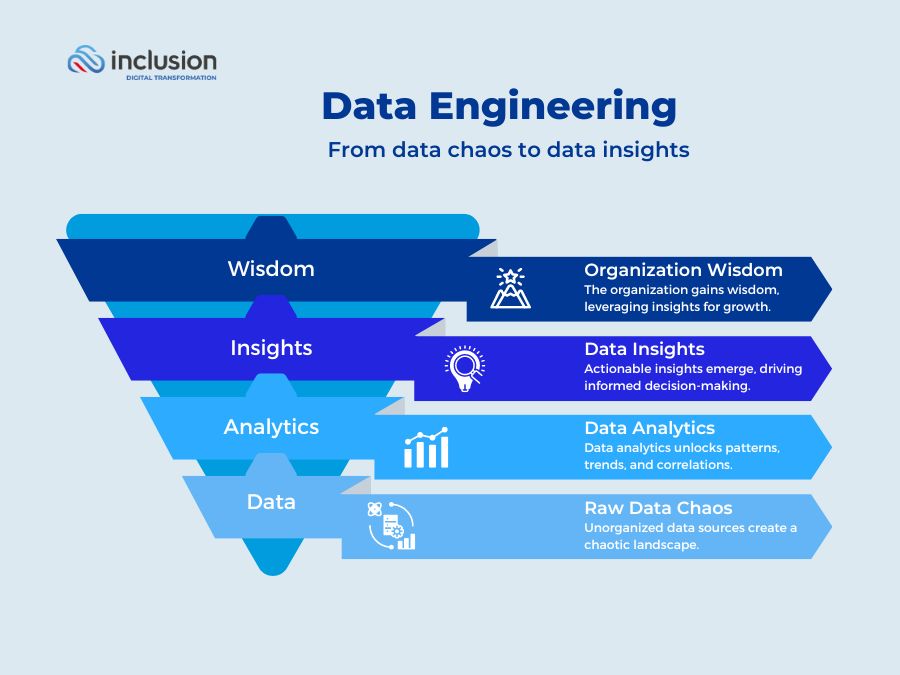
Image courtesy of inclusioncloud.com via Google Images
There are various types of JOINs in SQL, including INNER JOIN, LEFT JOIN, and RIGHT JOIN, each serving different purposes in combining data. Understanding database relationships and using JOINs effectively will enable you to retrieve comprehensive datasets for in-depth analysis.
Data aggregation in SQL
Aggregated data provides valuable insights into trends, patterns, and summary statistics within a dataset. The GROUP BY clause in SQL groups data based on specified columns, allowing you to summarize data by distinct values.
Aggregate functions such as COUNT, SUM, AVG, MIN, and MAX can be applied to grouped data to calculate metrics and analyze trends. The HAVING clause filters grouped data based on specified conditions, giving you control over the data included in your analysis.
Enhancing SQL queries with subqueries
Subqueries in SQL are nested queries that allow you to perform complex data analysis tasks within a single query. Depending on the context, subqueries can be used as scalar, column, or table expressions to retrieve or manipulate data.

Image courtesy of www.analyticsvidhya.com via Google Images
By utilizing subqueries in your SQL queries, you can achieve more sophisticated data analysis objectives, such as comparing values, identifying outliers, or filtering results based on dynamic criteria. Subqueries empower you to conduct in-depth analysis and draw actionable insights from your data.
Advanced SQL techniques for data manipulation
For more intricate data manipulation tasks, advanced SQL techniques such as CASE statements, temporary tables, and window functions can enhance your data analysis capabilities. CASE statements provide conditional logic within SQL queries, enabling you to categorize data based on specified criteria.
Temporary tables serve as intermediates for storing and processing data within a query, allowing you to break down complex tasks into manageable steps. Window functions, on the other hand, provide advanced analytical capabilities, such as ranking, partitioning, and aggregating data.
Optimizing SQL performance for large datasets
Optimizing SQL performance is crucial when dealing with large datasets to ensure efficient query processing and quick results retrieval. Indexing strategies can significantly impact query performance by accelerating data access and retrieval.

Image courtesy of www.linkedin.com via Google Images
Avoiding common pitfalls in SQL query optimization, such as inefficient joins, unnecessary sorting, or lack of indexing, is essential for maximizing query speed and efficiency. Utilizing tools like EXPLAIN to analyze query execution plans can help you identify areas for optimization and enhance query performance.
Connecting SQL with other data analysis tools
Integrating SQL with other data analysis tools opens up a world of possibilities for extracting, transforming, and visualizing data. Importing data from SQL into tools like Excel, Python, Tableau, or PowerBI allows you to leverage their unique functionalities for analysis and visualization.
By incorporating SQL queries into your workflow with ETL tools, you can automate data processing tasks and streamline your data analysis pipeline. The seamless integration of SQL with other tools empowers you to unleash the full potential of your data and derive meaningful insights for decision-making.
Conclusion
In conclusion, mastering SQL is essential for conducting effective data analysis and deriving valuable insights from raw data. By understanding the basics of SQL, writing efficient queries, working with multiple tables, and utilizing advanced techniques, you can elevate your data analysis skills and make informed decisions based on data-driven insights.
As you continue your journey as a data analyst, practice and apply the SQL skills and techniques covered in this guide to real-world projects. Explore more advanced SQL topics and data analysis methodologies to further enhance your expertise and excel in the field of data analytics. Remember, data is power, and with SQL as your tool, the possibilities are endless!