

Discover the incredible ways artificial intelligence is transforming healthcare in this eye-opening case study that will leave you amazed.

Table of Contents
Welcome, tech gurus! Today, let’s delve into a fascinating case study that showcases how artificial intelligence is transforming the healthcare industry. From diagnosing diseases to personalized treatment plans, AI is revolutionizing the way healthcare providers deliver care to patients.
Overview
Artificial intelligence, or AI, refers to the simulation of human intelligence processes by machines, especially computer systems. It has become the driving force behind technological advancements in various industries, including healthcare. The potential of AI in healthcare is vast, with the ability to analyze complex medical data, predict patient outcomes, and enhance patient care.
Latest Trends
In the realm of AI technology, some of the latest trends include the rise of machine learning, deep learning, and natural language processing. These advancements are enabling healthcare professionals to extract valuable insights from vast amounts of data, leading to more accurate diagnoses and personalized treatment plans. AI is also being used to streamline administrative tasks, such as scheduling appointments and handling patient records.
Case Study
One compelling example of AI revolutionizing the healthcare industry is the use of machine learning algorithms to detect early signs of diseases, such as cancer. These algorithms can analyze medical imaging data, such as X-rays and MRIs, with greater accuracy and speed than human radiologists. As a result, patients can receive timely diagnoses and treatment, ultimately leading to improved health outcomes.
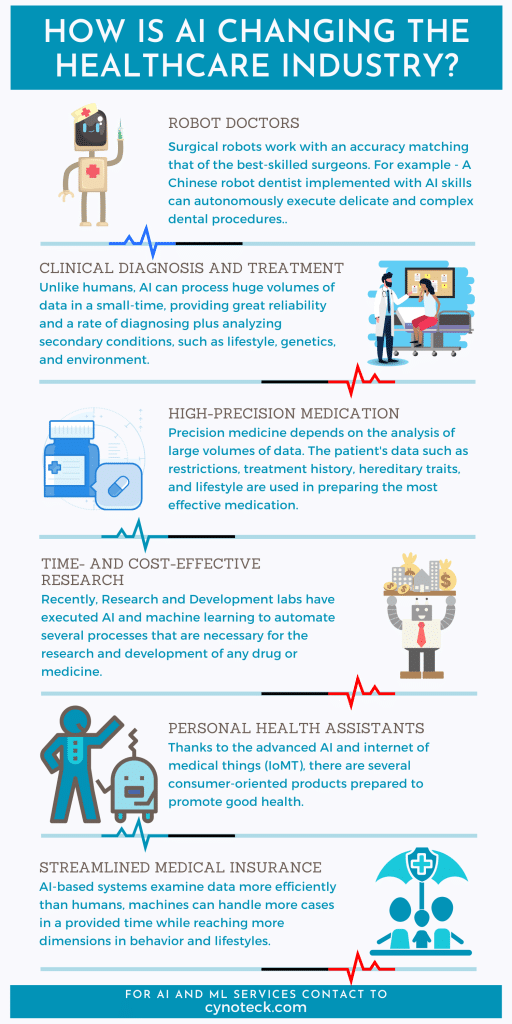
Image courtesy of cynoteck.com via Google Images
Additionally, AI-powered virtual assistants are being utilized in healthcare settings to enhance patient engagement and provide personalized health information. These virtual assistants can answer patient questions, schedule appointments, and even remind patients to take their medications, all through natural language processing technology.
Practical Tips
If you’re looking to incorporate AI into your healthcare practice or research, here are some practical tips to consider:
- Stay informed about the latest AI trends and developments in the healthcare industry
- Collaborate with data scientists and AI experts to implement AI solutions effectively
- Ensure compliance with data privacy and security regulations when using AI technologies
Future Outlook
Looking ahead, the future of AI in healthcare is promising, with continued advancements in predictive analytics, personalized medicine, and telehealth services. However, challenges related to data privacy, ethical considerations, and interoperability must be addressed to ensure that AI technologies benefit both healthcare providers and patients.

Image courtesy of redresscompliance.com via Google Images
Further Reading / Resources
For more information on AI in healthcare, we recommend exploring the following resources:
- Books: “Deep Medicine” by Dr. Eric Topol
- Online Course: “AI in Healthcare” on Coursera
- Website: Healthcare AI Summit for industry insights and networking opportunities
By staying informed and embracing AI technologies, we can continue to unlock the full potential of artificial intelligence in revolutionizing the healthcare industry. Together, let’s shape a future where AI enhances patient care, improves health outcomes, and inspires innovation in healthcare practices.