
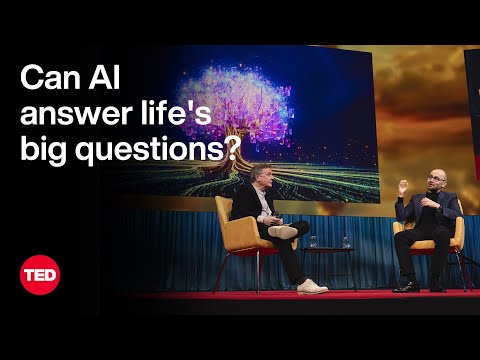
At the intersection of technology, science, and philosophy stands one individual whose ambition and innovation could redefine human understanding of the universe: Demis Hassabis. As the co-founder and CEO of DeepMind, Hassabis has spearheaded advancements in artificial intelligence (AI) that extend far beyond the realm of computational tasks and games. His vision? Using AI to traverse the vast tree of knowledge, addressing some of the most compelling scientific and philosophical questions of our age. This post explores Hassabis’s journey from a child prodigy to a leader in AI, delving into his groundbreaking work from AlphaGo to AlphaFold, and examining how his pursuit of Artificial General Intelligence (AGI) might shape the future of humanity.
The Genesis of a Visionary: Demis Hassabis’s Early Days and AI Ambition
Demis Hassabis’s fascination with AI began in his formative years, fueled by an early interest in games and a quest to understand human intelligence. Transitioning from mastering classics like Breakout to conceptualizing how machines can learn complex games such as Go, Hassabis’s journey encapsulates a relentless ambition to mimic and surpass human cognitive abilities. His educational path, marked by feats in neuroscience and computer science, laid the foundational knowledge for DeepMind. Hassabis’s vision was clear: to create a versatile, thinking machine capable of solving multifaceted problems, pushing the envelope of what AI could achieve, thereby unlocking new realms of scientific discovery and understanding.
Revolutionizing Science with AI: From AlphaGo to AlphaFold
The world watched in awe as AlphaGo, an AI developed by Hassabis’s DeepMind, defeated a world champion Go player in 2016. This victory was not just about a game; it symbolized AI’s potential to tackle complex, strategic challenges, eclipsing human capabilities. The evolution didn’t stop there – AlphaZero emerged, learning games like chess and Go from scratch, ultimately outperforming programmed algorithms and seasoned human experts. DeepMind’s most significant contribution to scientific exploration came with AlphaFold, which revolutionized the prediction of protein structures. By accurately forecasting the 3D shapes of proteins, AlphaFold provided insights that could accelerate drug discovery and enhance our understanding of diseases, showcasing the potential of AI to contribute to critical scientific breakthroughs.
Shaping the Future of AI: Collaboration, Competition, and Societal Impact
Hassabis envisions AI as a collaborative force, prompting an era of partnership between humans and machines. However, the race among tech giants to dominate this frontier brings a competitive edge to AI’s development. DeepMind’s open approach to sharing AlphaFold’s findings exemplifies how collaboration can prevail for the greater good, pushing forward our collective scientific understanding. Nevertheless, societal involvement is crucial in directing AI’s trajectory, ensuring these advancements benefit humanity and safeguard against potential misuses. Hassabis advocates for a future where AI, rooted in safety and cooperation, propels scientific discovery, opening up new avenues of research and granting us deeper insights into the fundamental nature of reality.
As we stand on the brink of potentially monumental scientific advancements fueled by AI, Demis Hassabis’s journey from a curious child to a visionary leader in AI development serves as a beacon of the untapped possibilities that lie in the fusion of technology and human intellect. The quest to unravel universal mysteries through AI is not just about technological prowess; it is a deeply philosophical endeavor that challenges us to redefine our understanding of intelligence, life, and the cosmos itself.