
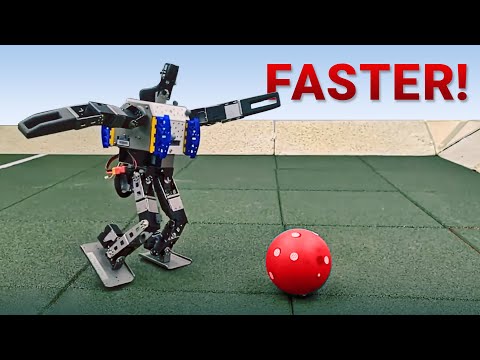
The intersection of artificial intelligence and sports is leading to groundbreaking advancements, particularly in football. In this digital era, AI agents are being trained to play football not on the field, but within the bounds of simulated environments. This innovative approach is not only redefining the capabilities of AI but is also setting a new benchmark for how technology can enhance athletic performance and strategy. The ability for these agents to learn, evolve, and transfer their skills from a virtual realm to reality (the sim2real pipeline) is particularly fascinating. In this article, we delve into how AI agents are trained, the challenges faced during this process, the remarkable achievements made so far, and what the future holds for AI in football.
Introduction to AI in Football
The application of AI in sports, especially football, is not just about automating tasks or analyzing player performance. It’s about creating intelligent agents capable of playing the game themselves. By training in simulated environments, these AI entities can rapidly advance their skills, moving from basic movement to executing complex strategies and teamwork. This not only opens new avenues for AI research but also provides valuable insights into the game for coaches, players, and fans alike.
Training AI Agents in Simulated Environments
Training AI agents to play football involves immersing them in a simulated video game-like world where the physical laws of the real world apply. These simulated environments allow for accelerated learning rates since AI agents can practice 24/7 without the limitations or the risk of injury that real-world training might encounter. Through advanced reinforcement learning techniques, where agents are rewarded for successful actions, AI football players can learn a wide array of skills, from basic gameplay to advanced tactics.
Challenges and Achievements
The path to creating competent AI football players is fraught with challenges. One of the foremost difficulties is teaching AI to control multiple joints and execute movements like kicking, blocking, and turning—all essential skills on the football field. Beyond physical movements, adaptation to unpredictable, dynamic in-game scenarios without losing performance poses a significant hurdle. Despite these challenges, success stories abound. AI agents have demonstrated the ability to surpass hard-coded behaviors, showcasing impressive skills in ball control, anticipation, and executing game strategies with precision.
Sim2real: Bridging Simulation and Reality
Sim2real projects represent a crucial step in the journey of AI football players. These initiatives focus on transferring the skills learned in the virtual domain to the real world. This transition involves overcoming discrepancies between the simulated and physical environments, such as differences in physics and the absence of real-world unpredictabilities in simulations. The seamless integration of these realms is crucial for the development of robot football players capable of competing on the actual field.
Key Outcomes of AI Training
The advancements in AI football are not just technical marvels; they represent potential shifts in how the game is played and understood. From enhanced training methods that offer risk-free environments to the development of strategies that were previously unexplored due to human limitations, the outcomes of AI training are vast. As these AI agents continue to evolve, their impact extends beyond the digital field, influencing real-world tactics, training techniques, and even the viewer’s experience of the game.
Conclusion: The Future of AI in Football
The integration of AI in football is just beginning. As technology evolves and our understanding deepens, the potential for AI agents in sports seems boundless. With each advancement in simulated training environments and sim2real projects, we move closer to a future where AI enhances every aspect of football, from player development to match strategy. The journey of AI in football is not just about creating robots that can play the game; it’s about pushing the boundaries of what’s possible, both on and off the field.