
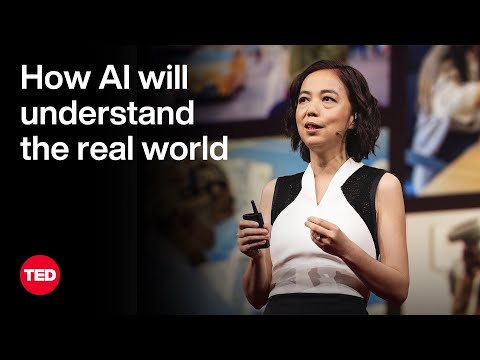
From the dawn of earthly life to the height of artificial intelligence, the journey of sight and intelligence is a fascinating story of adaptation, innovation, and evolution. The ability to perceive one’s environment visually has arguably been one of the most impactful developments in the history of life on Earth. This evolutionary milestone set the stage for the complex interplay between organisms and their habitats, leading us to today’s advanced technologies like computer vision and generative AI. In this article, we delve into the riveting chronology of sight and intelligence, stretching from the ancient trilobites to cutting-edge artificial intelligence, and explore how these developments have transformed not only biological entities but also technological landscapes.
The Dawn of Sight and Intelligence
Approximately 540 million years ago, the earth was a vastly different place. With no organism capable of perceiving light, the evolutionary possibilities were limited. This era saw the emergence of trilobites, the pioneering organisms that developed the rudimentary ability to sense light. With the advent of sight, even in its most primitive form, these creatures could better interact with their surroundings, hunt prey and avoid predators. The simple act of seeing set off a series of evolutionary processes that eventually led to the Cambrian explosion, a period marked by an extraordinary diversification of life forms entering the fossil record.
The Role of Vision in the Cambrian Explosion
The development of sight contributed enormously to the Cambrian explosion. The newfound ability of organisms to observe their environments initiated a survival arms race. Predators and prey evolved more sophisticated methods to outmaneuver each other, leading to rapid and diverse evolutionary advancements. This period saw the emergence of various body plans and specialized organs, resulting in the complex life forms that laid the foundation for higher intelligence. Vision acted as a crucial catalyst, driving the emergence of more advanced neural structures and behavioral strategies.
Advancements in Computer Vision and Modern AI
Fast forward to the 21st century, the advancements in computer vision owe much to the foundational principles established through natural evolution. Modern AI systems, powered by neural networks, GPUs, and big data, can now perform tasks such as labeling images, object segmentation, and even predicting relationships among objects in an image. These capabilities mark a significant leap from earlier algorithms, which were limited in scope and accuracy. Today’s computer vision technologies enable applications ranging from facial recognition to autonomous driving, revolutionizing numerous industries.
The Rise of Generative AI
Generative AI has taken the possibilities of artificial intelligence to new heights. These systems can now transform human input, such as sentences, into new photos and videos. For instance, models like the generative video model Walt showcase the potential for AI to learn, understand, and create content based on human instructions. This represents a paradigm shift in how humans and machines interact, opening new avenues for creativity and innovation.
Spatial Intelligence: Bridging the 3D World
Spatial intelligence refers to the capability to perceive and interact with the three-dimensional world effectively. In recent years, AI algorithms have been developed to convert 2D photos into 3D shapes, generate 3D room layouts from sentences, and create plausible 3D spaces for various applications. This evolution is not just a technical milestone but also a crucial step in making AI more adept at handling complex real-world scenarios.
Applications of Spatial Intelligence in Robotics and Healthcare
The advancements in spatial intelligence have significant implications for robotics and healthcare. In robotics, spatial intelligence enables machines to perform tasks based on verbal instructions, improving their utility and flexibility. In healthcare, autonomous systems such as smart sensors and robotic arms controlled by brain signals are transforming patient care. These technologies hold the promise of enhancing healthcare outcomes, providing personalized and efficient treatments, and improving the overall quality of life for patients.
The evolution of sight and intelligence, from ancient trilobites to modern AI, illustrates the remarkable journey of adaptation and innovation. As we continue to push the boundaries of what both biology and technology can achieve, the legacy of these evolutionary milestones serves as a testament to the infinite possibilities that lie ahead.