

Overwhelmed by the vast amount of data in the digital age? Fear not, as data analysis tools are here to empower you to navigate this sea of information with ease. In a world where data-driven decision-making can make or break businesses, having the right tools at your disposal is crucial for success. Discover the Top 10 Data Analytics Tools Trending in 2024 and equip yourself with the crucials to thrive in today’s data-driven landscape.

Key Takeaways:
- Invest in Tools: To succeed in the digital age, it’s crucial to invest in data analysis tools that can help you make sense of the vast amounts of information available.
- Understand Data Sources: Knowing where your data comes from is crucial for accurate analysis. Ensure you understand and trust the sources providing your data.
- Visualize Data Effectively: Utilize tools that can help you visually represent your data for easier understanding and interpretation.
- Stay Updated: The digital landscape is constantly evolving, so keep yourself abreast of the latest data analysis tools and technologies to stay ahead.
- Embrace Automation: Automation can significantly increase efficiency in data analysis processes, allowing you to focus on more valuable tasks.
- Interpret Results Thoughtfully: It’s not just about collecting data; it’s crucial to interpret the results thoughtfully to derive meaningful insights and make informed decisions.
- Continuous Learning: Data analysis tools are constantly improving, so commit to continuous learning to stay relevant and maximize the potential of these tools.

The Importance of Data Analysis
Why Data Analysis Matters in Today’s Business Landscape
While technology continues to advance at a rapid pace, one thing remains constant: data is king. In today’s digital age, businesses are inundated with vast amounts of data from various sources such as social media, website analytics, customer feedback, and more. Understanding and analyzing this data is crucial for making informed business decisions that can drive growth, enhance customer experience, and stay ahead of the competition.
For your business to thrive in the highly competitive landscape, data analysis is not just a valuable tool but a necessity. By harnessing the power of data analytics, you can uncover valuable insights, patterns, and trends that can provide a competitive edge. From identifying customer preferences to optimizing business processes, data analysis empowers you to make strategic decisions that are based on facts rather than guesswork.
Investing in data analysis tools and skills is no longer optional; it’s a strategic imperative for any business looking to succeed in the digital age. By leveraging data analysis effectively, you can unlock new opportunities, mitigate risks, and drive innovation that propels your business forward.
The Consequences of Ignoring Data Analysis
Data is the lifeblood of modern business operations, and ignoring its analysis can have serious repercussions. By turning a blind eye to data analysis, you risk making decisions based on intuition rather than evidence. This can lead to missed opportunities, ineffective strategies, and ultimately, losing ground to competitors who are data-driven.
Consequences of ignoring data analysis extend beyond missed opportunities. Inaccurate decision-making can result in wasted resources, lost revenue, and damaged reputation. In a rapidly evolving business environment, staying stagnant and relying on outdated methods can be detrimental to your long-term success. Embracing data analysis is not just about staying relevant but thriving in an era where data drives the business world.
Consequences of ignoring data analysis are not limited to short-term setbacks; they can have lasting effects on your business’s sustainability and growth. As the digital age unfolds, businesses that adapt and leverage data analytics will be the ones that emerge as industry leaders, while others may struggle to keep up with the pace of innovation.

Essential Data Analysis Tools
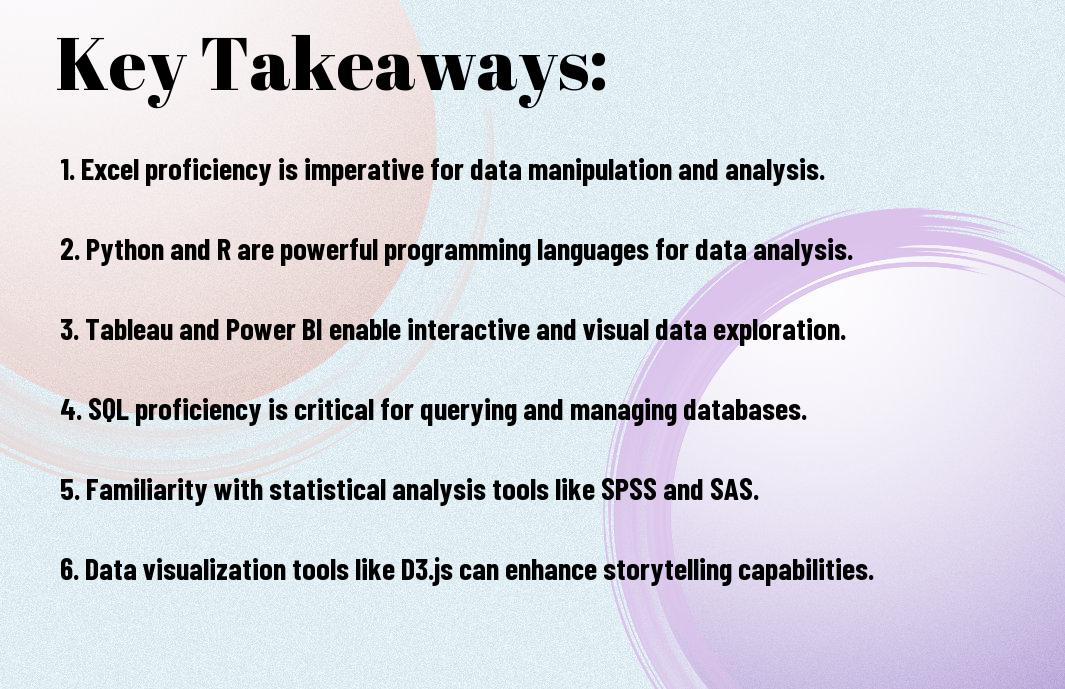
There’s no denying that in the digital age, having the right data analysis tools at your disposal is crucial for success. Whether you’re a business analyst, data scientist, or marketing professional, these tools are crucial for making sense of the vast amounts of data available to us. In this chapter, we will explore two key data analysis tools that you need to have in your toolkit.
Spreadsheets: The Foundation of Data Analysis
Analysis often begins with spreadsheets, such as Microsoft Excel or Google Sheets. Spreadsheets are the backbone of data analysis, allowing you to organize, manipulate, and analyze data efficiently. With powerful functions and features, spreadsheets enable you to perform tasks like sorting and filtering data, creating charts and graphs, and running complex calculations. Whether you’re working with sales figures, customer data, or any other type of information, spreadsheets are indispensable for gaining insights and making informed decisions.
By using spreadsheets effectively, you can streamline your data analysis process, spot trends and patterns, and unearth valuable insights that can drive business growth. With the ability to handle large datasets and perform calculations with ease, spreadsheets empower you to make data-driven decisions quickly and accurately. Whether you’re analyzing financial data, tracking key performance indicators, or evaluating marketing campaigns, mastering spreadsheets is crucial for unlocking the full potential of your data.
Data Visualization Software: Bringing Data to Life
Analysis using data visualization software is another critical tool for modern-day data analysis. Programs like Tableau, Power BI, and Google Data Studio allow you to create visually engaging charts, graphs, and dashboards that bring your data to life. With data visualization software, you can uncover insights at a glance, identify correlations and outliers, and communicate your findings effectively to stakeholders. These tools enable you to present complex data in a clear and compelling way, making it easier for others to understand and act upon the information.
Software such as Tableau and Power BI offer drag-and-drop interfaces, customizable visualization options, and real-time data connectivity, making it easier than ever to explore data and discover meaningful insights. With data visualization software, you can create interactive dashboards that allow you to drill down into specific data points, highlight trends, and tell a cohesive data story. Whether you’re presenting insights to executives, sharing findings with a team, or creating reports for clients, data visualization software is a powerful tool for enhancing your data analysis capabilities.
Descriptive Analytics
Once again, you find yourself delving into descriptive analytics, a fundamental aspect of data analysis that provides valuable insights into understanding and interpreting data. In this chapter, we will explore the crucial tools and techniques to help you master descriptive analytics and harness its power to drive informed decision-making.
Summarizing and Describing Data
Describing data involves the process of summarizing and presenting key characteristics of a dataset. This step is crucial in gaining a comprehensive overview of the data and identifying patterns, trends, and outliers. Common techniques for summarizing data include calculating measures of central tendency, such as mean, median, and mode, and measures of dispersion, such as range, variance, and standard deviation.
By summarizing and describing data effectively, you can uncover valuable insights that can inform business strategies, optimize operations, and enhance decision-making processes. Visualization tools like histograms, box plots, and scatter plots can also aid in presenting data in a clear and engaging manner, making it easier for stakeholders to grasp the key takeaways.
Whether you are analyzing sales figures, customer demographics, or website traffic data, mastering the art of summarizing and describing data is crucial for extracting actionable insights that can drive business growth and success in the digital age.
Measures of Central Tendency and Dispersion
With measures of central tendency and dispersion, you can gain a deeper understanding of the distribution of data points within a dataset. Central tendency measures, including the mean, median, and mode, provide insights into the center of the data and the typical or most common values. On the other hand, dispersion measures, such as variance and standard deviation, help you understand the spread or variability of the data points.
Understanding the central tendency and dispersion of your data is crucial for making informed decisions and drawing accurate conclusions. For example, knowing the average customer age (mean) and the variability of ages (standard deviation) can help you tailor marketing campaigns to specific age groups effectively. By utilizing these measures, you can uncover patterns, outliers, and trends that may have a significant impact on your business strategies.
Inferential Analytics
Your 7 best data analytics tools to use in 2024 must include inferential analytics tools to make accurate predictions and draw insightful conclusions. In the digital age, it’s crucial to go beyond descriptive analytics and investigate into inferential analytics to truly understand your data and make informed decisions.
Making Predictions and Drawing Conclusions
Any successful data analysis will involve making predictions and drawing conclusions based on the data at hand. Inferential analytics allows you to do just that by utilizing statistical methods to predict future trends and outcomes. By uncovering hidden patterns and relationships within your data, you can make informed decisions that drive your business forward.
With inferential analytics, you can identify correlations between different variables, forecast future trends, and even test hypotheses to validate your assumptions. By harnessing the power of inferential analytics tools in your data analysis arsenal, you can uncover valuable insights that are vital for staying ahead in today’s competitive digital landscape.