

Discover real-world examples of AI implementation in action with these compelling case studies that bridge theory and practical application.

Table of Contents
Hey there, Tech Gurus! Welcome to our blog where we explore the world of Artificial Intelligence on a daily basis. Today, we’re unraveling the mysteries of AI implementation through real-world case studies. From theory to practice, we’ll dive deep into some fascinating examples of AI applications that are reshaping industries and changing the game.
Overview
Before we jump into the exciting world of AI case studies, let’s set the stage with a quick overview. Artificial Intelligence, or AI, is a technology that enables machines to perform tasks that typically require human intelligence, such as visual perception, speech recognition, decision-making, and language translation. Within the realm of AI, we have subfields like machine learning and deep learning that power the algorithms driving intelligent systems.
At the core of AI technologies lie neural networks, which mimic the way human brains process information. Through data training, AI models can learn patterns and make decisions without being explicitly programmed. This revolutionary technology is transforming industries, from healthcare to finance to transportation, with its ability to automate processes, enhance predictions, and drive innovation.
Latest Trends
One of the most exciting aspects of AI is its ever-evolving landscape. Let’s take a look at some of the latest trends shaping the AI industry:
Natural Language Processing (NLP): With advances in NLP, AI systems can now understand, interpret, and generate human language, enabling applications like chatbots, translation services, and sentiment analysis.
Computer Vision: AI-powered computer vision systems are revolutionizing industries by enabling machines to interpret and analyze visual information, from facial recognition to object detection to autonomous driving.
Robotics: The integration of AI into robotics is pushing the boundaries of automation, leading to advancements in manufacturing, healthcare, and service industries.
Case Study
Now, let’s roll up our sleeves and delve into a fascinating real-world AI case study:
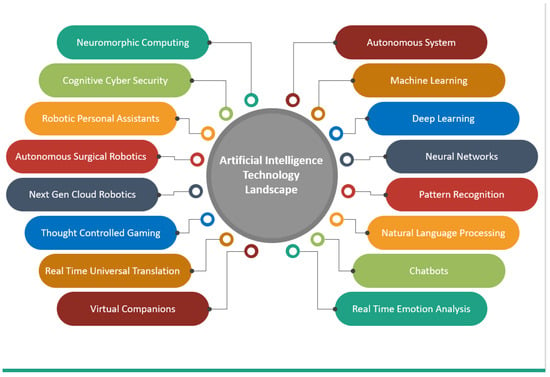
Image courtesy of www.mdpi.com via Google Images
Autonomous Vehicles: The Future of Transportation
Autonomous vehicles, or self-driving cars, are a prime example of AI implementation in action. Companies like Tesla, Waymo, and Uber are pushing the envelope with their efforts to transform the way we commute and travel.
Through a combination of sensors, cameras, and AI algorithms, autonomous vehicles can perceive their surroundings, make real-time decisions, and navigate complex environments. The impact of self-driving cars goes beyond convenience—it has the potential to reduce accidents, alleviate traffic congestion, and revolutionize urban mobility.
Practical Tips
Ready to harness the power of AI in your own projects? Here are some practical tips for implementing AI solutions effectively:
Start with a Clear Goal: Define the problem you want to solve with AI and establish clear objectives and success metrics.
Collect Quality Data: Data is the fuel that powers AI models, so ensure you have clean, relevant data for training and testing.
Choose the Right Algorithm: Select the appropriate AI algorithm based on your objectives, data type, and desired outcomes.
Iterate and Improve: AI is an iterative process, so continuously refine your models based on feedback and results to drive optimal performance.
Future Outlook
As we look ahead to the future of AI, the possibilities are endless. Here are some predictions on the horizon:
Image courtesy of www.mdpi.com via Google Images
Personalized Medicine: AI-driven healthcare solutions will revolutionize patient care through personalized treatment plans and predictive diagnostics.
AI Ethics: The rise of AI ethics will become increasingly important as we grapple with issues of bias, privacy, and fairness in AI-driven systems.
Industry Disruption: AI will continue to disrupt traditional industries, creating new opportunities for automation, innovation, and efficiency.
Further Reading / Resources
Are you hungry for more AI knowledge? Check out these resources for further exploration:
Books: “Artificial Intelligence: A Guide for Thinking Humans” by Melanie Mitchell
Articles: “The AI Revolution: The Road to Superintelligence” by Wait But Why
Online Courses: Coursera offers a variety of AI courses, from machine learning basics to advanced deep learning.
Industry Events: Attend AI conferences like the AI Summit or the RE•WORK AI Conference to connect with industry experts and enthusiasts.
Conclusion
And there you have it, Tech Gurus! An exciting journey from theory to practice through the lens of AI case studies. As the AI landscape continues to evolve, it’s essential to stay curious, informed, and ready to embrace the possibilities that AI offers. Subscribe to our blog for daily AI insights and join us on this transformative AI journey!