

Unleash the power of SQL with expert tips and tricks for efficient data analysis. Take your skills to the next level!

Table of Contents
Hey there, all you amazing educators-turned-data-analysts! Today, we’re diving into the world of SQL (Structured Query Language) – an essential tool for efficient data analysis. Whether you’re new to SQL or looking to up your game, this post is packed with tips and tricks to help you master this powerful language. So, grab your favorite beverage, get comfy, and let’s unlock the secrets of SQL together!
Understanding SQL Basics
SQL is the language used to communicate with and manipulate databases. It allows you to perform a wide range of operations, such as querying data, inserting new records, updating existing data, and deleting records. To become proficient in SQL, it’s important to have a solid understanding of the basics.
Tip #1: Start with Simple SELECT Statements
When starting out with SQL, begin by mastering the SELECT statement. This statement is used to retrieve data from a database based on specified criteria. Practice writing simple SELECT queries to retrieve specific columns or rows of data. For example, you can use the following syntax:
SELECT column1, column2 FROM table_name;
This query will return the values in column1 and column2 from the specified table.
Tip #2: Use Aliases for Clarity
Aliases can make your SQL queries more readable and concise. By assigning an alias to a table or column, you can refer to it by the alias throughout the query. This can help prevent ambiguity and improve the overall clarity of your code. Here’s an example:

Image courtesy of texta.ai via Google Images
SELECT column1 AS alias1, column2 AS alias2 FROM table_name;
In this query, the columns are given aliases alias1 and alias2 for easier reference.
Tip #3: Avoid Using SELECT *
While it may be tempting to use SELECT * to retrieve all columns from a table, this practice is not recommended for efficient data analysis. Selecting only the columns you need can result in faster query execution and reduce the amount of data returned. Be selective in your column choices to optimize performance.
Tip #4: Understand Joins for Data Manipulation
Joins are a fundamental concept in SQL that allow you to combine data from multiple tables based on a related column. Common types of joins include INNER JOIN, LEFT JOIN, and RIGHT JOIN. Understanding how joins work and when to use them is essential for performing complex data manipulations. Here’s an example of an INNER JOIN:
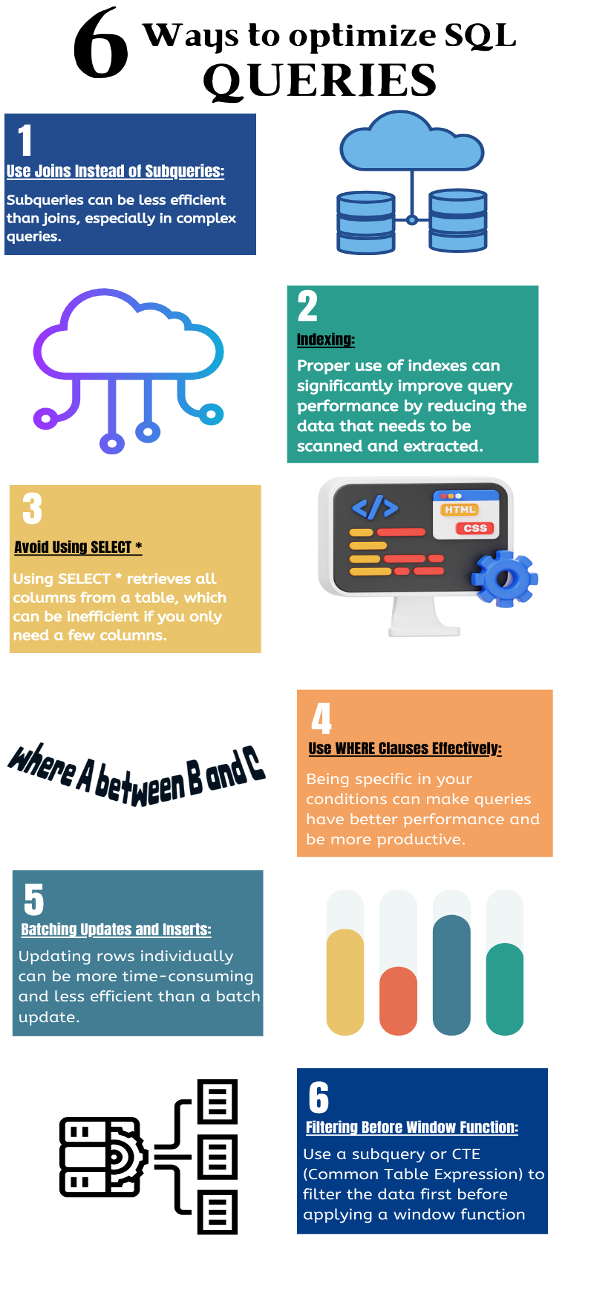
Image courtesy of medium.com via Google Images
SELECT column1, column2 FROM table1 INNER JOIN table2 ON table1.id = table2.id;
This query selects data from columns in table1 and table2 where the id columns match.
Tip #5: Practice Regularly to Improve
Like any skill, mastering SQL requires practice and persistence. Challenge yourself with real-world data analysis tasks, work on refining your queries, and explore advanced techniques as you become more comfortable with the language. The more you practice, the more confident and efficient you’ll become in using SQL for data analysis.
Tip #6: Stay Curious and Continuously Learn
The world of data analysis is constantly evolving, with new technologies and tools emerging all the time. Stay curious, keep exploring new features and functionalities of SQL, and don’t be afraid to experiment with different approaches. By staying open to learning and adapting, you’ll be well-equipped to tackle any data analysis challenge that comes your way.
So there you have it, folks! With these tips and tricks in your toolkit, you’re well on your way to mastering SQL and becoming a pro at data analysis. Remember, practice makes perfect, so keep honing your skills, exploring new possibilities, and unleashing the true power of SQL in your data analysis endeavors. You’ve got this!