
In the world of computer graphics, one of the most fascinating and challenging tasks is the realistic simulation of elastic bodies. Picture the way an octopus elegantly manipulates its tentacles or an armadillo curls up into a defensive ball. Achieving such realism in a virtual environment requires immense computational power, sophisticated algorithms, and innovative techniques. But how does one simulate the nuanced movement and intricate interactions of these elastic materials? In this article, we delve into the science behind simulating elastic bodies, explore the challenges faced, and uncover the groundbreaking techniques that make these simulations possible.
Introduction to Simulating Elastic Bodies
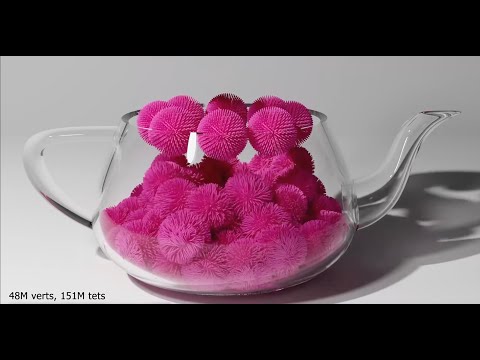
Simulating the movement of elastic bodies on a computer is a complex and remarkable achievement in science. Elastic bodies, such as squishy balls or soft tissues, require precise calculations to model their deformation and reactions accurately. In a computer-generated environment, these simulations are essential for creating realistic animations in movies, video games, and even virtual reality applications. The video showcases simulations of various elastic materials interacting, demonstrating the intricacies of simulating collisions and their subsequent behavior.
Challenges in Simulating Elastic Interactions
Modeling elastic materials introduces a range of challenges, particularly when simulating complex interactions between different objects. For example, consider the interaction between an octopus and an armadillo, both of which exhibit unique elastic properties. Accurately representing these interactions requires precise algorithms capable of handling the elasticity, collision response, and deformation of each object. Stability tests are critical to ensure that the simulator performs adequately under extreme conditions, maintaining resilience and accuracy even during intense deformations and interactions.
Innovative Techniques for Efficient Simulations
To overcome these challenges, researchers have developed innovative techniques that subdivide large problems into smaller, more manageable ones. This approach allows for independent and efficient solutions, supported by Gauss-Seidel iterations. By breaking down a complex interaction into smaller components, the simulation can handle millions of vertices and tetrahedra, analogous to packing a city’s population into a tiny space. This subdivision not only makes the simulations more manageable but also enables rapid calculations, significantly improving the speed and efficiency of the simulation process.
Stability and Speed: The Future of Simulations
The future of elastic body simulations lies in achieving stability and speed without compromising accuracy. The new techniques under discussion perform calculations in a few seconds per frame, boasting speeds up to 100-1000 times faster than previous methods. This rapid processing capability allows for real-time simulations of highly complex interactions, opening new possibilities for advancements in computer graphics. As these techniques continue to evolve, we can expect even more realistic and dynamic animations, pushing the boundaries of what is possible in digital environments.
In conclusion, simulating elastic bodies in computer graphics merges high-level mathematics, cutting-edge algorithms, and innovative problem-solving methods. The ongoing enhancements in stability and speed are crucial steps towards creating ever more realistic digital representations of the real world. With continued research and development, the future holds exciting prospects for more immersive and visually captivating experiences in computer graphics.