

Data is the backbone of any successful organization, and designing a scalable data architecture is vital for managing growth and complexity. In this step-by-step guide, you’ll learn how to create a robust data framework that adapts to your needs, ensuring efficient data processing and storage. From understanding fundamental concepts to implementing best practices, this guide will equip you with the knowledge needed to build a data architecture that not only meets today’s demands but also scales for tomorrow’s challenges. Let’s dive in and empower your data strategy!
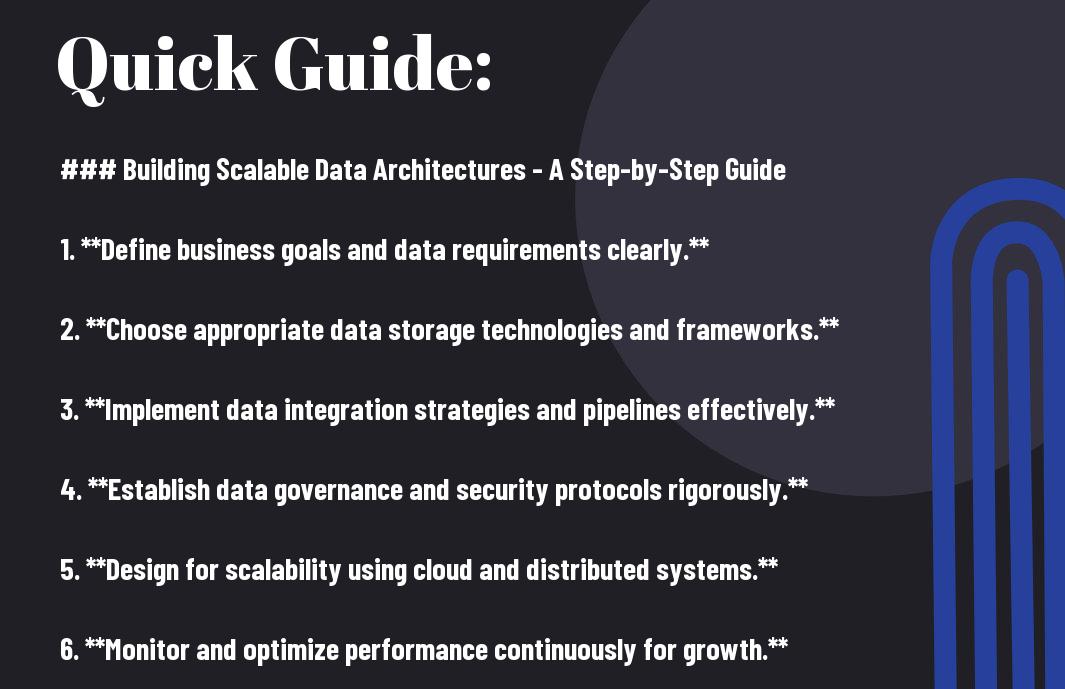
Understanding Data Architecture Types
Before submerging into the specifics of data architecture, it’s imperative to understand the various types available and how they can impact your scalability and efficiency. Choosing the right architecture is crucial for maximizing the potential of your data systems, as each type has its strengths and weaknesses. Here’s a brief overview of the main data architecture types you should consider:
- Monolithic Architecture
- Microservices Architecture
- Event-Driven Architecture
- Serverless Architecture
- Data Lake Architecture
Thou need to understand these architectures as they can significantly influence your data system’s performance and scalability.
| Data Architecture Type | Description |
|---|---|
| Monolithic Architecture | A single, unified software application where all components are interconnected and interdependent. |
| Microservices Architecture | A design approach that splits applications into smaller, independent services, each of which can be developed, deployed, and scaled independently. |
| Event-Driven Architecture | A system architecture that relies on events to trigger actions and facilitate communication between different components. |
| Serverless Architecture | A cloud computing model where the cloud provider manages server allocation and scaling, allowing developers to focus on writing code. |
| Data Lake Architecture | A storage repository that holds vast amounts of raw data in its native format until it is needed for analysis. |
Monolithic Architecture
Architecture can be described as a single, cohesive unit in which all components are tightly integrated and dependent on one another. This approach simplifies development because all code is managed in one place. As a result, deploying and testing your application tends to be straightforward since there aren’t multiple services to manage or coordinate. Monolithic architecture can be particularly beneficial for small teams or projects where rapid development is imperative due to the reduced overhead in managing distributed systems.
However, as your application scales and grows in complexity, certain challenges may arise. The interdependency of components means that a change in one area could require extensive testing and possibly affect other components, which can lead to deployment delays. Moreover, monolithic systems can become challenging to maintain over time since the codebase can grow unwieldy, making it harder for new team members to grasp the application. This can significantly slow down your development cycle and affect your ability to innovate.
Nevertheless, for smaller applications or startups, monolithic architecture may be a suitable choice where rapid iterations and simple deployments are prioritized. Understanding the trade-offs is crucial, as moving away from a monolithic setup later can often involve a considerable effort. Think carefully about your long-term plans and whether a monolithic approach aligns with your strategic vision. You may decide that, at some point in the future, scaling will dictate a switch to another architecture.
Microservices Architecture
Data-driven organizations increasingly lean towards the Microservices architecture, wherein applications are divided into smaller, independent services that handle specific functions or pieces of data. This modular approach allows each service to be developed, deployed, and managed individually, fostering agility and responsiveness. By isolating functionalities, your teams can work concurrently on different services without the worry of interfering with one another’s progress. This can result in accelerated development timelines and enhancements in the application’s overall health and performance.
The resilience of Microservices architecture is another significant advantage. If one microservice encounters an issue, it doesn’t necessarily bring down the entire application. Each service can operate independently; hence, they can be maintained or updated with minimal disruption to the user experience. Additionally, you can choose different technology stacks for different microservices, tailoring them to the specific needs of each function or dataset. This flexibility can be critical when you want to implement emerging technologies that enhance your systems.
To successfully implement Microservices architecture, however, requires an effective strategy for service management and communication. Your development teams must ensure that there’s a robust framework for API communication and that all services are secure and scalable. While it offers many benefits, navigating these complexities can be daunting. It’s imperative to prepare your team with the right skills and tools to manage this intricate architecture effectively. You’ll find that investing time in planning will pay dividends in the long run.
Architecture in Microservices facilitates a high level of autonomy, meaning teams can develop and deploy their services without waiting for other teams. This independence leads to higher motivation and faster delivery times, giving your organization a competitive edge. Every microservice can also be scaled individually to meet demand, which is a boon for resource efficiency. It emphasizes that you are not locked into a single point of failure, and your data systems can adapt as your business needs evolve.
Event-Driven Architecture
Architecture plays a pivotal role in how data flows through your systems when adopting an Event-Driven Architecture (EDA). In this setup, components listen for events or changes in state and trigger specific actions in response. This architecture lays the groundwork for fostering real-time responsiveness in your applications, whether it involves reacting to user behaviors, changes in data, or external prompts. This state of continuous interaction can create a more dynamic user experience and improved operational efficiency.
You’d find that EDA enables your systems to remain decoupled, allowing for scalability and flexibility. When events occur, services process them independently, which means you can add or modify components without affecting the overall system’s performance. For instance, adding a new feature or service can be as simple as subscribing it to the existing event stream. Consequently, this modular approach aligns beautifully with modern development practices, promoting faster delivery cycles and easier data integration.
However, embracing event-driven architecture requires careful consideration of design and implementation nuances. You need to have a robust event management system that facilitates the proper handling, routing, and processing of events. Comparable to a well-tuned orchestra, every component must work in harmony to ensure that events are captured and responded to in real-time. To optimize this effectiveness, investing in monitoring tools and establishing clear protocols is critical.
To break into Event-Driven Architecture further, you need to ensure that your team is equipped with the skills and knowledge to manage asynchronous communications effectively. This architecture allows for high throughput and low latency, positioning your organization to capitalize on opportunities as they arise swiftly. Collectively embracing this architectural style can dramatically enhance your ability to respond to market changes, ultimately leading to improved customer satisfaction and business resilience.

Factors to Consider When Building Scalable Data Architectures
Assuming you’re launching on the journey of building a scalable data architecture, you must take several factors into consideration to ensure an efficient and flexible system. From understanding the nature of your data to recognizing your organization’s business requirements, each element plays a crucial role in creating a robust architecture. Here’s a list of fundamental factors to consider:
- Data Volume and Velocity
- Data Variety and Veracity
- Business Requirements and Constraints
This guide will provide a comprehensive overview of each factor to assist you in making informed decisions as you develop your scalable data architecture.
Data Volume and Velocity
Assuming you’ve gathered insights on the volume and velocity of data your organization is likely to handle, it becomes evident how crucial these metrics are for your architecture. Data volume refers to the sheer amount of data generated by your business processes, user interactions, and various external sources. High data volume can present challenges such as storage limitations, processing performance, and increased complexity in data management. Therefore, it is vital to anticipate not only your current data volume but also its growth trajectory as your organization scales. Strategies such as data partitioning or leveraging distributed computing can help tackle these issues effectively.
Alongside volume, the velocity at which data is generated and processed cannot be overlooked. In today’s fast-paced digital environment, real-time data processing can be a game-changer for decision-making and operational efficiency. You need to consider the ingestion rates of your data and ensure your architecture is prepared to handle these massive streams efficiently. Implementing technologies such as event-driven architectures or streaming data platforms may be necessary to meet your organization’s demands. A solid understanding of your data’s velocity will directly affect how you structure your pipelines, storage solutions, and retrieval mechanisms.
This dual focus on volume and velocity lays the foundation for a scalable data architecture that not only meets present needs but can adapt to future requirements. Understanding these factors will help you create a resilient system that can handle the growing data challenges in your business landscape.
Data Variety and Veracity
When constructing your data architecture, you need to recognize the diversity of data types your organization encounters and their reliability. Data variety refers to the different formats, structures, and sources of data you may be dealing with, including structured data (like databases), semi-structured data (like JSON files), and unstructured data (like images or social media posts). In order to build an architecture capable of accommodating this diversity, you may need to implement versatile storage solutions and analytical tools that can handle data of different formats seamlessly. Understanding the variety of data ensures that you are prepared for unforeseen data sources that could enhance insights and decision-making.
Veracity, on the other hand, pertains to the quality and accuracy of the data. Incomplete, inconsistent, or erroneous data can lead to significant challenges in deriving meaningful insights and making informed decisions. As you build your architecture, you should establish processes and governance to ensure data integrity and authenticity. Employing data validation techniques and implementing robust data governance frameworks will help you maintain high veracity, laying the groundwork for trustworthy analytics. Without a focus on veracity, all the variety in your data won’t contribute to valuable insights.
Consider that the interplay between data variety and veracity is critical. By addressing both factors, you can create a system that not only accommodates a plethora of data formats but also ensures that the information gathered and processed leads to reliable analysis. Implementing this balance will empower your organization to optimize data utilization for strategic initiatives.
Business Requirements and Constraints
With the landscape of business evolving at lightning speed, understanding your organization’s specific requirements and constraints becomes vital as you build a scalable data architecture. Your architecture must align with your organizational goals, whether that’s creating a seamless data flow for operational efficiency, enabling robust analytics for strategic insights, or adhering to compliance regulations that safeguard data privacy. Each requirement can have a significant impact on the design choices you make, from the technologies you adopt to how your data flow is organized. Identifying these needs early allows for better alignment between your data strategy and overall business objectives.
Another important aspect to consider is your organization’s constraints, which may include budget limitations, regulatory requirements, or existing legacy systems that can limit the flexibility of your new architecture. By evaluating these constraints, you can make strategic trade-offs that keep your project viable without sacrificing scalability or functionality. Choosing solutions that prioritize adaptability and accommodate future changes in business direction is also key to overcoming constraints, allowing your architecture to evolve in step with your organization.
This comprehensive approach will empower you to construct a data architecture that meets both current and future demands while adhering to vital requirements and constraints. By ensuring alignment between your architecture and business objectives, you harness the power of data more effectively.
Velocity is an important concept when discussing business requirements and constraints, as it highlights the need for timely data processing and analysis in order to meet organizational objectives. Understanding how your architecture can support the rapid flow of data, whether it’s through near real-time processing or batch processing methods, will be vital in addressing business needs. Establishing the velocity of data flow not only enhances operational efficiency but also contributes to improved decision-making, keeping you responsive in a fast-paced environment.
Step-by-Step Guide to Building Scalable Data Architectures
To build a scalable data architecture, it is vital to follow a structured step-by-step approach. This guideline will help ensure you craft a robust and flexible data system capable of adapting to your organization’s growing needs. Below is a simplified overview that outlines the critical steps you must follow:
| Define Data Architecture Requirements | Identify the key goals, data types, and stakeholder needs. |
| Design Data Architecture Components | Create the blueprint for your data architecture, including data sources, storage, processing, and access methods. |
| Implement Data Architecture Solutions | Deploy the designed architecture, ensuring it integrates seamlessly with existing systems. |
Define Data Architecture Requirements
Data architecture requirements serve as the foundation of your scalable data architecture. You need to conduct a thorough analysis of your current data assets and future data needs to identify what is necessary for the organization. This involves consulting with various stakeholders, including business leaders, data scientists, and IT personnel, to gather insights on what they expect from the data architecture. Understanding these requirements will enable you to cater to their needs effectively while aligning with your organization’s strategic goals.
When defining your data architecture requirements, consider factors such as data volume, variety, velocity, and veracity. Ask questions like: How much data do you anticipate processing daily? What types of data (structured, semi-structured, or unstructured) will you need to manage? How quickly does that data need to be analyzed and accessed? By addressing these elements, you will have a clearer picture of the systems and technologies that are necessary, ensuring your architecture not only supports current needs but is ready to scale in the future.
Furthermore, establish performance metrics and compliance requirements at this stage. Consider what key performance indicators (KPIs) you will monitor to measure the success of your data architecture. Additionally, think about industry standards and regulations such as GDPR or HIPAA that must be incorporated into your data governance framework. The more comprehensive your requirements definition, the better your architecture will perform in terms of efficiency, security, and usability.
Design Data Architecture Components
You have now gathered the requirements for your data architecture, and it’s time to move to the design phase. This involves creating a detailed plan of the various components that will make up your scalable data architecture. You will have to map out where your data will come from, how it will be stored and processed, and how end-users will access it. This blueprint will include decisions on tools and technologies like data warehouses, data lakes, ETL (Extract, Transform, Load) processes, and how they will interact with one another.
A critical part of the design process is ensuring that the components you choose can handle increased workloads without bottlenecks. This may involve opting for distributed systems or cloud-based solutions that allow you to scale your resources up or down based on demand. Think about how you can implement microservices, which can work independently but still integrate together, making your architecture more flexible and easier to manage.
In addition to the technical components, consider the organizational aspects of your data architecture. Design workflows that facilitate communication between your data engineering teams, analytics teams, and end-users. Establish access tiers that define who has access to what data and ensure the system encourages collaboration while maintaining data security and integrity. The design phase should align the technical structure with the collaborative culture of data use in your organization.
Understanding the intricacies involved in designing data architecture components equips you with the clarity you need to create a system that meets your needs. Documenting each component’s purpose, its interactions with other elements, and contributing technologies will serve as a reference for your team’s implementation efforts. This design documentation is indispensable for current and future team members, providing insight into the architecture’s original intentions.
Implement Data Architecture Solutions
If you have successfully defined your data architecture requirements and designed its components, the next challenge is implementation. This phase requires you to ensure that your chosen technologies and methodologies are correctly deployed and that they integrate smoothly with existing systems. Begin by setting up your data ingestion pipeline, ensuring data flows into your architecture as planned, while also validating its quality and accuracy. Deploy any databases, data warehouses, or data lakes as outlined in your design plan and confirm that they can accommodate the anticipated volume and variety of data.
After deploying your infrastructure, another critical step is to implement security measures. Ensure that both data-at-rest and data-in-transit are adequately secured according to your governance policies. Utilize encryption, anonymization, and access control measures to protect sensitive data. Moreover, it’s crucial to establish monitoring tools that enable you to track performance metrics and flag any anomalies in real-time, enabling you to maintain a steady state of performance even under varying workloads.
Once the infrastructure is in place and security configurations are set, focus on user onboarding and training. Equip your team with the necessary skills to effectively utilize the new architecture. Regularly gather feedback from users to identify any shortcomings and iteratively improve the architecture based on practical use. The implementation phase is where you will see the fruits of your initial planning come together, and its success hinges on meticulous execution and adaptability.
Architecture plays a pivotal role in ensuring that your data architecture is sustainable over the long term. Keeping abreast of technological advancements and regularly reviewing your architecture against emerging trends will allow your setup to remain relevant and efficient. It’s not merely about initial implementation; you must also plan for continuous updates and scaling so that as your business evolves, your data architecture will seamlessly support its growth.
Choosing the Right Data Storage Solutions
After considering various scaling strategies for your data architecture, one of the most critical decisions you’ll face is choosing the right data storage solutions. The effectiveness of your architecture largely hinges on how and where you store your data. Understanding the different types of databases and storage options available can significantly impact your performance, scalability, and overall efficiency. This chapter explores into various storage solutions, including relational databases, NoSQL databases, and cloud-based data storage options, equipping you with the knowledge to make an informed choice based on your project’s specific requirements.
Relational Databases
Relational databases are one of the most traditional forms of data storage. They organize data into tables that relate to each other through predefined relationships, often employing Structured Query Language (SQL) for database management. When you opt for a relational database, you benefit from strong data consistency, a robust query language, and ACID (atomicity, consistency, isolation, durability) compliance. These features make relational databases the go-to choice for applications where data integrity is paramount, such as banking systems or any domain requiring precise and consistent data transactions.
Another significant advantage of relational databases is their mature ecosystem. A wide array of tools and libraries is available for integration, management, and analytics, making it simpler for you to build comprehensive applications. Furthermore, frameworks that interface with relational databases have been refined through decades of development, ensuring that you access reliable support and documentation. This stability is particularly appealing for long-term projects where changes in technology can have cascading effects.
On the flip side, relational databases can encounter scalability challenges, particularly when dealing with large datasets or high-velocity data streams. As your data grows, performance may suffer due to the rigid structure that needs to maintain relationships between different tables. Additionally, introducing changes to the schema can be cumbersome and time-consuming, presenting a barrier if you’re working in an agile environment that rapidly evolves as new requirements surface.
NoSQL Databases
Data storage solutions classified as NoSQL databases diverge from the traditional relational model, offering flexibility and scalability. These databases employ various data models, including document-oriented, key-value, wide-column, or graph-based approaches, enabling you to choose the structure that best meets your data needs. One of the primary advantages of NoSQL databases is their ability to handle unstructured or semi-structured data, making them ideal for modern applications that generate diverse types of data, such as social media feeds, sensor data, or content management systems.
NoSQL databases are also designed with horizontal scaling in mind. This means that as your data volume increases, you can easily add more servers to manage that growth without compromising performance. Specifically, document-based databases like MongoDB or key-value stores like Redis are renowned for their ease of scaling out horizontally, which means you can adjust your resources dynamically as your application demands change. This adaptability is crucial when you anticipate fluctuations in user engagement or data input.
A NoSQL database often sacrifices some level of consistency in favor of increased availability and partition tolerance, adhering to the CAP theorem. While this trade-off can lead to faster response times and greater flexibility, it’s imperative to carefully assess whether it aligns with your project’s specific needs regarding data integrity and structure.
Cloud-Based Data Storage Options
NoSQL databases have the advantage of being ideally suited for the cloud environment. However, cloud-based data storage options encompass a broader range of services that can meet various data management needs. With cloud storage, you’re provided with scalable resources that can be adjusted to your requirements dynamically, relieving you from the burdens of managing physical servers and infrastructure. Services such as Amazon S3, Google Cloud Storage, or Azure Blob Storage offer seamless integration with other cloud services, enhancing your ability to analyze and utilize data across different platforms.
Adopting a cloud-based storage solution also offers you efficient disaster recovery and data redundancy capabilities. Major cloud providers implement numerous safety measures to protect your data against failures, including automatic backups, systems for data retrieval, and geographical distribution to prevent loss. This reliability is invaluable in today’s data-driven landscape, where businesses may face data loss or downtime that can significantly impact operations and customer trust.
For instance, when you opt for a cloud-based solution, you can combine the benefits of scalability and flexibility with the powerful analytics tools offered by cloud platforms. It allows you to harness machine learning and artificial intelligence to derive insights from your data and make more informed business decisions. The growing trend towards using cloud-based solutions positions it as a leading choice in the evolution of data architectures, paving the way for you to innovate without limitations.
Data Processing and Analytics
Despite the increasing complexity of modern data landscapes, an effective data processing and analytics strategy enables businesses to extract valuable insights from their data assets. As organizations grow, the sheer volume of data can overwhelm existing systems, leading to the need for a more robust architecture that can handle various types of data processing. This is where you should consider different approaches, such as batch processing and real-time processing, which can significantly impact how you derive insights from your data.
Batch Processing vs. Real-Time Processing
Processing data in batches involves collecting data over a set period and then executing analytics on the entire dataset at once. This method is particularly useful for organizations that can afford to wait for insights to arrive periodically rather than instantly. For example, if you’re analyzing monthly sales figures or generating end-of-day reports, batch processing allows you to efficiently process large volumes of data and compress the time needed for analysis. However, one limitation you might encounter is that the information can quickly become outdated, hindering your ability to react swiftly to unforeseen changes in your business environment.
On the other hand, real-time processing allows you to capture and analyze data instantaneously, providing you with a continuous stream of insights. This method is particularly advantageous in scenarios where immediate data-driven decisions are crucial, such as fraud detection or social media monitoring. By adopting real-time processing, you empower your organization to be more proactive and responsive, facilitating an agile approach to problem-solving. However, this strategy often requires advanced technology and infrastructure, as it can become more expensive and complex, especially if your organization needs to scale to accommodate increasing data streams.
Ultimately, the choice between batch and real-time processing should be guided by your unique business needs and goals. Assessing factors such as the type of insights you require, the urgency of those insights, and your available resources are critical in determining the right approach. It’s not uncommon for organizations to adopt a hybrid model, combining both batch and real-time processing, allowing for flexibility and scalability in their data architectures, thus maximizing the value derived from their data.
Data Integration and Interoperability
Analytics in today’s data-driven world means bringing together data from various sources to enable a comprehensive view of your operations. Achieving data integration involves consolidating data from disparate systems—such as CRM, ERP, and other databases—into a centralized repository, enabling you to analyze and draw insights more effectively. You have to ensure that your systems are interoperable, allowing for seamless data exchange between platforms. This integration is fundamental in creating a holistic view of your organization’s performance and unlocking deeper insights that can drive better decision-making.
Understanding the importance of interoperability in your data architecture is vital. It ensures that your systems can effectively communicate and share data, reducing silos and making it easier to gain insights across various departments. This integration also means you can maintain data integrity and consistency, allowing for more accurate analytics. Additionally, by using industry-standard protocols and APIs, your organization can adopt new technologies and solutions as your needs evolve without the fear of being locked into a single vendor’s ecosystem.
Data Visualization and Reporting
Interoperability within your data architecture does not end with integration; it critically impacts your ability to present insights effectively. Once you have consolidated your data, visualizing that data can dramatically enhance your understanding and communication of complex information. With effective data visualization tools, you can create interactive dashboards and reports that allow you to uncover patterns, trends, and outliers at a glance. This not only aids you in making data-driven decisions, but it also allows stakeholders across your organization to grasp vital insights swiftly, fostering a data-driven culture.
As you prioritize data visualization and reporting, consider how different visual formats can convey insights effectively. For example, charts, graphs, and maps can help highlight significant trends in your data more effectively than tables packed with numbers. Furthermore, interactive reporting enables you to drill down into details, allowing you to explore the data from multiple dimensions. Consistently investing in user-friendly visualization tools can foster collaboration within your organization, encouraging stakeholders to engage with the data and make informed decisions based on visual evidence. Always remember, effective visualization is as much about storytelling as it is about statistics; it allows you to turn data into compelling narratives that drive action.
Ensuring Data Quality and Integrity
Once again, as you examine deeper into building scalable data architectures, the importance of maintaining data quality and integrity cannot be overstated. In your quest for a reliable data-driven solution, you must adopt rigorous measures to ensure that the data you collect, process, and analyze is both accurate and trustworthy. This chapter highlights key strategies designed to help you preserve your data’s quality and integrity, focusing on principles such as data validation and verification, data cleansing and transformation, and data backup and recovery. Each of these practices plays a vital role in supporting your overarching data strategy.
Data Validation and Verification
While creating any scalable data architecture, validating and verifying your data is an crucial step that you must not overlook. Data validation involves the process of ensuring that the data entering your system conforms to predefined formats, rules, and constraints. This means checking your data for correctness, completeness, and consistency upon entry. If any data does not meet these criteria, it should either be corrected or rejected before further processing. By rigorously validating incoming data, you help safeguard your data processing pipelines from the adverse effects of bad data that could undermine your results.
Verification goes hand-in-hand with validation, as it assesses whether your validated data meets the expected outcomes based on existing data predictions or models. This involves cross-referencing your dataset with other reliable sources or using statistical methods to determine whether the data accurately reflects its intended state. You can implement automated verification checks as a part of your data ingestion process to ensure that your architecture continuously monitors the validity of the data flowing through it. By conducting extensive validation and verification, you equip your data architecture with the necessary groundwork for sound data decisions.
As you refine your validation and verification processes, consider incorporating a feedback loop to improve the methods continually. By monitoring the efficiency of your existing procedures, you can identify common data discrepancies and address systemic issues that could affect your overall data quality. Ensure that your team stays aligned with evolving standards and best practices to help maintain the integrity of your data over time. Through diligent efforts in validation and verification, you reinforce the reliability of your data architecture and instill trust in the data-driven outcomes you aim to achieve.
Data Cleansing and Transformation
If your goal is to build a scalable data architecture, data cleansing and transformation are crucial practices that you cannot afford to ignore. Data cleansing involves identifying and rectifying inaccuracies, inconsistencies, and incomplete information within your datasets. You might discover duplicate records, errors in data entry, or even missing values that can distort your analysis. By implementing cleansing processes, you enhance the overall quality of your data, ensuring that the inputs are as accurate and reliable as possible before they are analyzed or integrated into your business intelligence applications.
Furthermore, data transformation plays a vital role in preparing your structured and unstructured data for analysis. This involves taking your raw data and converting it into a form that can be easily ingested, processed, and analyzed by your data architecture. Transforming data can include normalizing values, aggregating metrics, or even enriching your datasets by merging them with additional data sources. By employing various transformation techniques, you create a unified view of your data, which supports better decision-making and insights for your organization.
Integrating automated tools and functions can significantly enhance your data cleansing and transformation processes. These tools offer the ability to run regular data quality checks and apply cleansing rules consistently without requiring manual intervention. Automation not only increases efficiency but also minimizes human error, allowing you to maintain high-quality data with less overhead. As you continue to innovate and improve your scalable architecture, investing in robust data cleansing and transformation tools ensures that you can reliably wield quality data for analytical and operational purposes.
Plus, regularly scheduling these cleansing and transformation efforts as part of your data lifecycle can lead to ongoing improvements in data integrity. By adopting a proactive approach to data management, you help ensure that your architecture remains resilient and effective in generating actionable insights.
Data Backup and Recovery
Any scalable data architecture requires a robust data backup and recovery plan to protect against unforeseen disruptions, data loss, or system failures. It is crucial that you devise a comprehensive strategy to back up your data consistently, ensuring that you can restore it in the event of a disaster. Depending on the needs of your organization, consider backing up your data in multiple formats and locations, such as cloud storage and physical servers, to enhance fault tolerance and reduce risks associated with single points of failure. Moreover, maintaining version history for your backups can be invaluable in protecting against accidental data overwrites or deletions.
A solid recovery plan is equally important, as it outlines the steps to be taken in the event of a data loss incident. You should establish a recovery time objective (RTO) and recovery point objective (RPO) that define how quickly you must restore your data and how much data loss is acceptable. Regularly testing your backup and recovery procedures will allow you to assess the efficiency and reliability of your plan, ultimately ensuring your data is safe and available when you need it most. It is vital to engage your team in these drills and encourage a culture of preparedness, so everyone is familiar with their roles in the event of a disruption.
Furthermore, as your data architecture scales, adapting your backup and recovery strategies to account for the growing volume of data becomes crucial. As a best practice, review your existing policies regularly and stay informed of emerging technologies or services that can further enhance your backup and recovery processes. Consider tiered backup solutions that offer a combination of full, differential, and incremental backups, providing greater efficiency and flexibility tailored to your specific needs.
Validation of your backup and recovery solutions forms a critical component of maintaining data integrity. Periodic assessments of your backups will ensure that you can recover your data accurately and swiftly, thus reinforcing trust in your architecture.
Security and Access Control for Scalable Data Architectures
Keep in mind that security and access control are paramount when building a scalable data architecture. As your data grows and expands across multiple platforms and environments, ensuring that only authorized individuals can access sensitive information is vital. You need to carefully design your authentication and authorization mechanisms to prevent unauthorized access and ensure that your data remains secure. This involves putting in place layered security measures that effectively manage user identity and regulate access rights based on defined roles and responsibilities. By establishing a robust authentication system, you pave the way for a well-protected data ecosystem that can grow with your organization’s needs.
Authentication and Authorization
To create a secure data architecture, you must focus on implementing effective authentication and authorization measures. Authentication is the process of verifying the identity of a user attempting to access your system. You can utilize various methods to authenticate users, including passwords, multi-factor authentication (MFA), biometric checks, and single sign-on (SSO) solutions. A comprehensive approach to authentication not only strengthens user identity verification but also builds trust among stakeholders that their sensitive data is in safe hands.
Once you have verified a user’s identity, the next critical step is authorization, which grants permission to access specific data or resources based on that identity. You should adopt a principle of least privilege (PoLP) to ensure users only have access to the minimum resources they need to perform their roles. Implementing role-based access control (RBAC) systems is an effective way to manage authorization. By mapping user roles to access levels, you can streamline access management and make it easier to audit permissions as you scale your architecture.
As you continue to expand your data architecture, ensure that your authentication and authorization processes remain adaptable. You may encounter new regulatory requirements or changes in business strategies that necessitate adjustments in your access controls. Regularly reviewing your authentication protocols and access policies helps guarantee that they stay current with threats and challenges while maintaining the integrity of your data infrastructure.
Data Encryption and Masking
Data encryption and masking are important techniques you should not overlook as you develop your scalable data architecture. Encryption involves converting data into a code to prevent unauthorized access. This means that even if an intruder successfully breaches your systems, the information they obtain would be unreadable unless they have the proper decoding keys. By employing robust encryption standards, such as AES (Advanced Encryption Standard), you ensure that your data-at-rest and data-in-transit are adequately safeguarded, securing private user data and proprietary business information from various threats.
Data masking, on the other hand, plays a pivotal role in protecting sensitive information by obfuscating the original data values. You can use masking techniques to transform critical data, such as personally identifiable information (PII), into a format that is unusable to unauthorized users. This is especially useful in non-production environments, where developers or testers may need to work with data without exposing sensitive information. By implementing both encryption and masking, you create a multi-layered defense that significantly reduces the risk of data breaches.
Another critical aspect of data encryption and masking to consider is ensuring compliance with various regulations, such as GDPR (General Data Protection Regulation) or HIPAA (Health Insurance Portability and Accountability Act). Adopting encryption and masking practices will not only help you protect data, but it will also demonstrate your commitment to safeguarding customer privacy and adhering to legal standards. This enhances brand reputation and instills confidence among your users and stakeholders.
Access Control and Auditing
Data governance plays a vital role in ensuring that your scalable data architecture maintains high-security standards through efficient access control and auditing mechanisms. Access control enables you to enforce policies that dictate who may enter your systems, what data they can access, and what operations they can perform on that data. As your architecture scales, it becomes increasingly important that you evaluate and refine these access controls to prevent unauthorized or unintended data access. Regularly updating your access control lists (ACLs) and monitoring user activity can help you mitigate potential security vulnerabilities.
Auditing is equally critical, as it allows you to track and review access to your data, enabling you to detect suspicious activity promptly. By implementing comprehensive auditing strategies, you can maintain an audit trail of who accessed what data and when, making it easier to respond to potential security incidents or compliance failures. Regular audits give you insights into your data access patterns and help identify areas where you can tighten security measures or simplify access protocols, thereby enhancing your overall data governance frameworks.
Scalable access control and auditing practices involve continuous adaptation to new threats and changes in regulatory landscapes. It’s important to implement automated auditing tools that integrate with your data architecture to keep historical records of user access and identify any anomalies in real-time. By staying proactive, you can ensure that your data architecture not only prioritizes security today but also remains resilient against tomorrow’s challenges.
Scaling Data Architectures for High Performance
Horizontal Scaling vs. Vertical Scaling
Your approach to scaling data architectures can significantly impact performance and capacity. When considering how to increase resource availability, you’ll encounter two primary strategies: vertical scaling and horizontal scaling. Vertical scaling, often referred to as “scaling up,” involves adding more power to your existing hardware. This can mean upgrading your servers with faster CPUs, adding more RAM, or increasing storage capacity. While vertical scaling is generally easier to implement and can yield immediate performance improvements, it comes with limitations, as there’s a maximum threshold to how much you can upgrade a single machine. Moreover, it can lead to downtime during the upgrade process, which may not be acceptable for mission-critical applications.
On the other hand, horizontal scaling, or “scaling out,” means adding more machines or nodes to your existing infrastructure. This method can potentially provide greater flexibility and fault tolerance. You can distribute workloads across multiple servers, which not only enhances performance but also enables you to handle larger volumes of data and user requests. While horizontal scaling may involve a steeper learning curve and require more complex orchestration, the added resilience and capacity to manage concurrent requests make it an attractive option for organizations that anticipate rapid growth or sudden spikes in traffic.
Ultimately, the choice between horizontal and vertical scaling depends on your specific needs, existing infrastructure, and projected data volume. For businesses aiming to maintain high availability and scalability, a hybrid approach often proves to be the best solution, combining elements of both strategies to create a robust architecture that can adapt and thrive as demands change over time. The goal is to align your scaling practices with your organization’s long-term objectives, allowing your data architecture to evolve seamlessly alongside your business growth.
Load Balancing and Caching
You should consider load balancing and caching as crucial components in your data architecture to ensure high performance. Load balancing involves distributing network or application traffic across multiple servers, preventing any single server from becoming a bottleneck. By using a load balancer, you can optimize resource use, maximize throughput, and minimize response time. This setup can provide robustness by allowing rerouting traffic if one of the servers fails, thus increasing your overall system resilience and performance.
Caching, on the other hand, stores frequently accessed data in temporary locations, allowing for quick retrieval and reducing the need to fetch data from the original source repeatedly. Caching can notably enhance the performance of your applications by serving cached content to users rather than making them wait for the same information to be retrieved anew. It significantly reduces latency and can alleviate the workload on your primary data sources, which is particularly beneficial for high-traffic scenarios where speed is crucial.
To achieve optimal performance, the right balance between load balancing and caching is necessary. You’ll want to analyze your data access patterns and determine what data should be cached and how load should be balanced across your servers. By implementing these strategies effectively, you will not only ensure better performance during peak loads, but you will also be preparing your architecture to handle future growth and changes in user behavior.
The role of load balancing and caching can’t be overstated; they work together to enhance your data architecture’s performance. With an effective load balancing strategy, you can manage traffic efficiently, while caching provides a temporary repository for frequently requested data. Together, they pave the way for a smooth, fast, and reliable user experience, crucial in today’s data-driven landscape.
Content Delivery Networks and Edge Computing
Scaling your data architecture often involves the implementation of Content Delivery Networks (CDNs) and edge computing. CDNs are designed to redistribute your content geographically, so that users can access data from locations closer to them. This significantly reduces latency and improves loading times, which is crucial for maintaining user engagement and satisfaction. By leveraging a network of global servers, CDNs help to ensure that your content is delivered efficiently, even during high traffic spikes.
Edge computing complements CDNs by bringing computation closer to the data source and the user. Instead of relying solely on centralized data centers, edge computing processes data at the “edge” of the network, closer to where it is generated or consumed. This means that data can be analyzed and acted upon more quickly, leading to lower latencies and improved real-time interactions. With the rise of IoT (Internet of Things) devices and applications that demand immediate data processing, edge computing is becoming increasingly important for building scalable data architectures.
As you consider integrating CDNs and edge computing into your infrastructure, think about the specific use cases and data types that will benefit from these technologies. Content that requires immediate access, such as video streaming or real-time analytics, will thrive in an edge computing environment, while static content like images or stylesheets can benefit from the global reach of a CDN. Strategically merging these technologies into your data architecture allows you to optimize performance, enrich user experiences, and ensure that your system can scale seamlessly with increasing demand.
Edge computing plays a critical role in modern data architectures by enhancing operational efficiencies. It allows for data to be processed and analyzed at the point of origin, minimizing the need to send data back and forth to centralized cloud servers. This reduces latency and provides real-time insights, which is crucial for applications requiring immediate feedback. By leveraging both edge computing and CDN technologies, you can design a data architecture that is not only scalable but also capable of meeting the high-performance demands of your users.
Tips for Building Scalable Data Architectures
Many data architects and engineers understand the importance of creating a scalable data architecture that can handle growth and change. Here are some tips to guide you in developing your scalable frameworks:
- Choose the right database technology that fits your needs.
- Leverage cloud services for flexibility and scalability.
- Implement data partitioning strategies to enhance performance.
- Use caching mechanisms to speed up data retrieval.
- Design your data model with scalability in mind.
- Regularly evaluate your architecture to anticipate necessary changes.
This approach ensures that your data architecture remains robust and responsive as your data needs evolve.
Design for Failure
While no one likes to think about failure, planning for it is an important part of building a scalable data architecture. Data systems are complex, and unforeseen issues can and will arise. By incorporating redundancy and failover mechanisms into your design, you can ensure that your system remains operational even when individual components fail. This might involve using techniques such as replication, sharding, or clustering to increase data availability and durability. These strategies mean you won’t lose access to critical data, even in the face of hardware malfunctions or unexpected outages.
Moreover, it’s vital to embrace a culture of failure in your development team. Encourage your engineers to test and simulate failures in a controlled environment. Conducting chaos engineering experiments can help you understand how your system behaves under stress and where weaknesses lay. By identifying potential points of failure in advance, you can make the necessary adjustments to your architecture, giving you greater confidence that it will withstand real-world challenges.
Furthermore, document your failure recovery processes comprehensively so that every team member understands their role in restoring functionality. A well-structured incident response plan can speed up recovery times and minimize the impact on your organization. Building in automatic alerting and monitoring systems can also help you quickly identify when issues arise, allowing your team to react promptly and effectively. By designing with failure in mind, you can create a robust and resilient data architecture.
Monitor and Optimize Performance
With the increasing demands on data architectures, constant monitoring and optimization are critical to maintaining peak performance. Establishing clear performance metrics and KPIs allows you to have measurable goals for your data systems. Regularly evaluate how your architecture handles load and assess any bottlenecks. Tools such as performance dashboards can provide real-time insights into your system’s behavior, enabling you to respond to performance degradations proactively.
In addition to monitoring, performing routine optimizations is important. Regularly revisiting your data queries to identify any inefficiencies can lead to significant performance gains. You might also want to reconsider your indexing strategy, as optimal indexing can drastically reduce retrieval times for your database. Fine-tuning storage solutions — whether it’s a relational database, NoSQL, or data warehouse technology — can directly impact data retrieval speed and overall user experience.
Failure to actively monitor and optimize performance can lead to slow query times, frustrated users, and ultimately, a loss of faith in your data architecture. By making performance monitoring a regular part of your operational routine and being proactive about optimizations, you can ensure that your architecture scales effectively, gracefully handling growth and increased user demand.
Plan for Future Growth and Expansion
Little details can make a big difference in your data architecture when it comes to planning for future growth. As you design your data systems, always consider where your organization is headed in the coming years. Scalability needs can shift quickly, and what works today may not suffice tomorrow. Building your data architecture on a foundation that easily accommodates new workloads, additional data sources, or increased traffic is crucial for long-term success. Incorporating modular components will allow you to add or replace elements as needed without overhauling the entire architecture.
Moreover, it’s important to stay attuned to the evolving technology landscape. Innovations in data technologies, cloud computing capabilities, and data processing frameworks can present new opportunities for your architecture. Regularly revisiting your technology stack will ensure that you are leveraging the latest solutions that can enhance performance and scalability. It is also beneficial to maintain a strong relationship with vendors and service providers as they may have insights into upcoming technologies that could be relevant to your growth plans.
Expansion strategies should also include clear timelines and roadmaps for implementation. Having a detailed plan allows you to allocate resources effectively and prepare your team for any necessary training on new tools or technologies. By keeping growth at the forefront of your planning, you position your data architecture to not just meet current demands but also to thrive in the face of future challenges.
Pros and Cons of Different Data Architecture Approaches
Now, when considering data architecture approaches, it’s crucial to evaluate their respective advantages and disadvantages to determine which best suits your organization’s needs. Each architecture type boasts unique characteristics that cater to different scenarios and requirements, thereby impacting scalability, maintainability, and overall performance.
Monolithic Architecture Pros and Cons
| Pros | Cons |
|---|---|
| Simplicity in development and deployment | Difficulty in scaling components independently |
| Easy initial setup and configuration | Heavy reliance on a single codebase |
| Improved performance due to fewer inter-service communications | Challenging to manage code in larger applications |
| Streamlined testing process | Potentially longer time to implement new features |
| Strong consistency and cohesion in functionality | Difficulty in addressing technological debt over time |
| Unified security model | Single points of failure may arise |
| Lower latency for internal services | Risk of the entire system failing due to one component |
| Lower hosting and operational costs | Slower deployment cycles |
| Strong community support and resources | Harder to adopt new technologies without a full rewrite |
On the other hand, monolithic architecture has proven to be an attractive option for many organizations, particularly those with smaller teams and fewer resources. Your initial development efforts can be quick and straightforward since the entire application runs as a single unit. This leads to faster integration and deployment when your application’s scope is limited. However, as you scale and the complexity of your project grows, maintaining a monolithic codebase can quickly become unwieldy. You may find that each new feature you introduce can introduce risks, affecting not just the new capabilities, but potentially breaking existing functionalities as well.
Moreover, when your application starts to reach a certain size, the monolithic structure can lead to slower rollout cycles for new features. Every modification requires rebuilding and deploying the entire application, which could result in increased downtime. The tighter coupling of components also makes it challenging to update or replace obsolete sections of the code without affecting other parts. This architecture may suit smaller teams that need simplicity, but shifts to larger applications with complex functionalities necessitate evaluating alternative architectures altogether.
Microservices Architecture Pros and Cons
Microservices Architecture Pros and Cons
| Pros | Cons |
|---|---|
| Independently scalable components | Complexity in development and management |
| Ability to choose technologies per service | Inter-service communication can introduce latency |
| Faster deployment and iteration cycles | Difficulty in proper data management |
| Improved fault tolerance | Higher operational overhead |
| Enhanced team autonomy | Increased need for DevOps skills |
| Allows for continuous deployment | Challenges with transaction consistency |
| Granular monitoring and maintenance | Potential for service sprawl |
| Better alignment with Agile practices | Initially higher costs for setup |
| Clearer service boundaries and responsibilities | Difficulty of end-to-end testing |
Some organizations are increasingly gravitating toward microservices architecture, drawn by the compelling benefits it offers. This approach allows you to slice your application into smaller, manageable services that can be developed, deployed, and scaled independently. Microservices touch on the principles of Agile development: they treat each service as a product managed by a small, cross-functional team, enabling you to rapidly iterate and refine each component without disturbing the whole application. The flexibility that microservices provide means you can extensively customize each service according to your specific needs, leading to improved user experiences and system performance.
However, the microservices approach can also lead to increased complexity and operational challenges. While you gain more autonomy in each distinct service, you must also manage the inherent difficulties of coordinating multiple services, which may involve various data storage solutions and communication methods. As a result, your transactions may span multiple services, complicating the management of consistency and making data handling problematic. Beyond the technical intricacies, the necessity for well-defined DevOps practices can put additional strain on your existing resources as you shift your mindset to accommodate the distributed nature of microservices.
Event-Driven Architecture Pros and Cons
Event-Driven Architecture Pros and Cons
| Pros | Cons |
|---|---|
| Highly decoupled components | Complex event processing and management |
| Excellent scalability and performance | Challenges in debugging and monitoring |
| Improved responsiveness and adaptability | Increased development overhead |
| Flexibility in adding or changing components | Possible message broker failures |
| Supports real-time data processing | Complicated failure handling mechanisms |
| Better fit for heterogeneous systems | Requires experience in event-driven patterns |
| Reduced inter-service communication costs | Risk of duplicate event processing |
| Aggressive decoupling leading to agile deployment | Maintaining event schema versioning can be tricky |
| Encourages innovation in architecture | Potentially high infrastructure costs |
Little wonder that event-driven architecture is increasingly becoming a popular choice for organizations dealing with real-time data needs. By decoupling components through event streams, your application gains the ability to react dynamically to changes and triggers. This architecture maximizes responsiveness, enabling you to build systems that efficiently respond to incoming events and data flows. Moreover, the high scalability and flexibility afforded by an event-driven approach makes it easier to accommodate growing dataset demands and introduce new features without considerable downtime or disruption.
Nevertheless, you need to remain vigilant against the complexities that event-driven architecture can introduce. While loosely coupled components can lead to improved scalability, they require sophisticated event processing strategies and robust monitoring to ensure efficient operation. Without careful management, these layers of abstraction can complicate debugging, necessitating deeper insights into your event flows and state management. Thus, if you decide to integrate this architecture, investing in the right tooling and practices will be necessary to reaping the benefits while controlling the challenges.
Microservices architecture, while it presents its own sets of challenges and rewards, dovetails nicely with event-driven approaches. Together, they can form a solid foundation for a modern, scalable data architecture. However, be proactive in addressing the complexities that their integration can incur, ensuring proper tooling and practices are in place to harness their full power.
Common Challenges and Solutions in Scalable Data Architectures
Handling Big Data and High Traffic
For businesses looking to harness the power of big data, the challenge of managing an ever-growing volume of information can feel overwhelming. Architectures designed for scalability must be robust enough to handle not just the sheer volume of data but also the high traffic levels that often accompany it. As your data collection scales, ensuring that the architecture can seamlessly accommodate simultaneous requests for data can be a daunting task. To approach this issue, consider utilizing distributed systems, which allow your architecture to spread loads across multiple servers. This can prevent bottlenecks that occur when all traffic is routed through a single point, providing your users with a smoother experience even during peak times.
Architectures also need to be dynamic, allowing you to add resources quickly as needed. One effective strategy is to employ elastic cloud services that automatically scale based on demand. By leveraging platforms that offer auto-scaling capabilities, you can ensure that your architecture can handle sudden spikes in traffic. For instance, during promotional campaigns or product launches, your data systems might experience a surge in requests; therefore, having this flexibility can drastically reduce the risk of downtime and ensure that your applications remain responsive.
Finally, consider adopting data streaming technologies that allow for real-time data processing and analytics. Instead of processing large batches of data at once, streaming technology enables continuous data flow, which is vital for applications that require up-to-the-minute insights. By utilizing tools and frameworks that support real-time analytics, you can significantly enhance your ability to respond to changes in high-traffic scenarios, ultimately ensuring a more adaptable and resilient data architecture.
Managing Data Latency and Consistency
Data latency and consistency are significant concerns in scalable data architectures, particularly when your operations require immediate insights. Data latency refers to the delay between data generation and its availability for analysis, while consistency relates to the accuracy and uniformity of that data across different nodes in your architecture. Data consistency can often be compromised in distributed systems, especially when the scale increases. To effectively manage these challenges, it’s crucial to understand your application’s specific requirements, as some systems can tolerate higher latencies than others.
Data architectures must incorporate strategies to minimize latency while preserving consistency. You might consider employing caching mechanisms to store frequently accessed data closer to your users. This reduces the need to fetch data from slower, remote databases, enhancing overall performance. Additionally, adopting eventual consistency models can allow for higher scalability by permitting temporary discrepancies between data replicas, which can be reconciled over time. This approach is often fitting for distributed architectures while still ensuring that users can access the most up-to-date information as needed.
To navigate these challenges effectively, you should also explore employing distributed databases with built-in replication capabilities. These databases allow you to maintain copies of your data across various nodes, improving accessibility and fault tolerance. When handling large-scale operations, the goal is to find the right balance between performance and consistency that aligns with your application’s needs to deliver reliable results to your users.
Managing data latency and consistency effectively is pivotal in ensuring that your architecture remains responsive while also providing reliable, accurate information. As you develop your data strategies, constantly evaluate how trade-offs will impact your business operations.
Ensuring Data Compliance and Governance
Architectures intending to scale need to incorporate robust frameworks for compliance and governance. As your data environment grows, so does complexity, making it critical for you to stay ahead of legal regulations and data governance policies. Ensure that your architecture is not only compliant with industry standards and regulations—such as GDPR or CCPA—but also flexible enough to adapt to future changes. This requires embedding compliance protocols into your data architecture from the outset rather than treating them as an afterthought.
Implementing role-based access control (RBAC) is an effective way to ensure that only authorized personnel can access sensitive data. By adopting a clear framework around data access and security protocols, you can enhance not only your regulatory compliance but also enrich your data quality and integrity. Incorporating automated compliance checks and logging mechanisms will also help you maintain a transparent trail of data use as you scale your operations, which is crucial to sustaining trust with your users and stakeholders.
Furthermore, adopting data lineage tracking will enable you to monitor where your data comes from, how it moves through your systems, and where it is stored. This transparency will empower you to make informed decisions about data management while ensuring compliance with existing policies and regulations. As your data architecture matures, a strong focus on governance will be integral to enforcing accountability and maintaining ethical data usage.
A solid framework for data compliance and governance will not only mitigate risks but also serve as a foundation for building trust with your clients and stakeholders. Always be proactive with your strategies to adapt to the evolving regulatory landscape, ensuring long-term success for your scalable data architecture.
Best Practices for Data Architecture Governance
Despite the complexity inherent in data architecture, establishing a robust governance structure is crucial for ensuring the effectiveness and reliability of any data system. Governance isn’t just about enforcing rules; it’s about providing a framework within which your organization can operate while maintaining high standards of data integrity, security, and compliance. By setting clear guidelines, you create an environment where all stakeholders understand their roles and responsibilities in managing data, thus paving the way for more scalable and adaptable architectures.
Data Architecture Standards and Policies
Little is more vital than crafting comprehensive standards and policies for your data architecture. These documents lay the groundwork for how data is classified, managed, and utilized across your organization. They provide the guidelines necessary for ensuring data consistency and quality, enabling your team to apply uniform approaches to data management. As you develop your standards, consider including data governance roles, data ownership responsibilities, and data access controls, as these elements ensure that your organization maintains a high level of data integrity and security.
Furthermore, implementing a set of clear standards for data architecture allows you to mitigate risks associated with data misuse and poor quality. When everyone understands the expectations and requirements outlined in your data policies, it becomes easier to manage data flows and assess the impact of any changes or new implementations. This diligence ultimately leads to a more effective data environment where data is seen as a strategic asset rather than just a byproduct of operations. A collaborative approach, where diverse stakeholders contribute to shaping the standards, can further enhance these policies by ensuring they mirror the organization’s specific needs and challenges.
Lastly, these standards shouldn’t be static; they need to evolve with your organization’s changing landscape. Regular reviews and updates are necessary to keep your data architecture relevant in a fast-paced digital world. By making it a priority to revisit and revise your data architecture standards periodically, you affirm your commitment to maintaining a high-quality data governance strategy that aligns with your organization’s objectives and growth.
Data Architecture Reviews and Audits
Practices surrounding data architecture reviews and audits are critical in enhancing the integrity and effectiveness of your data governance framework. Regular reviews allow you to assess whether your data architecture complies with established policies and standards. They provide an opportunity to identify inefficiencies, redundancies, or potential risks that might be lurking within your data systems. By making these reviews a standard part of your governance process, you can maintain a proactive stance rather than being reactive to issues when they arise.
In addition to regular reviews, conducting audits can offer deeper insights into the operational efficacy of your data architecture. Audits help scrutinize the processes associated with data management, ensuring that they align with not only regulatory standards but also your internal policies. By engaging in both proactive reviews and reactive audits, you create a dynamic governance environment where ongoing improvement is encouraged. This vigilance plays a significant role in safeguarding your data from security vulnerabilities or compliance breaches that could jeopardize your organization’s reputation and success.
Another crucial aspect of maintaining the effectiveness of your data architecture is creating a robust communication channel that enables stakeholders to provide feedback during reviews and audits. Ensuring that your team feels heard and valued fosters a culture of transparency and collaboration. Ultimately, having a clear structure for carrying out these reviews and audits will empower you to take informed, data-driven decisions that enhance your governance framework and algorithm efficiency.
Data Architecture Training and Education
Governance is far more than just rules and standards; it relies heavily on the skills and knowledge of those implementing it. Investing in training and education for your staff should be viewed as a strategic priority in mastering data architecture governance. By providing your team with the necessary tools and knowledge, you not only enhance their ability to comply with the established standards but also foster a culture of accountability and continuous improvement. Understanding the importance of the guidelines, policies, and the broader context of data governance empowers your team to make informed decisions that positively impact the organization’s data landscape.
Moreover, tailored training sessions that address the specific needs of different departments can go a long way in enhancing your organization’s overall data competency. By ensuring that all employees understand the criticality of data governance, you create advocates within various teams who can contribute to a holistic governance approach. This type of cross-training emphasizes collaboration, encouraging departments to work together to uphold the organization’s data integrity.
Plus, ongoing education initiatives can help your team stay updated on latest trends, technologies, and best practices in data governance. Encouraging attendance at workshops, conferences, or online courses allows them to hone their skills continually. A well-trained team is not only better equipped to handle challenges but also motivated to contribute to a culture of excellence in data management. Ultimately, investing in training and education ensures your data architecture governance evolves alongside your organization, remarkably enhancing the value of your data assets.
Emerging Trends and Technologies in Scalable Data Architectures
Not all data architectures are created equal, and as technology evolves, it is critical to stay informed about emerging trends that can enhance scalability. In this chapter, we explore some of the transformative trends and technologies reshaping scalable data architectures, including Artificial Intelligence and Machine Learning, Internet of Things (IoT) and Edge Computing, and Cloud-Native Data Architectures. These innovations not only optimize your data management but also position you to leverage data in more sophisticated ways, driving informed decision-making and efficiency throughout your organization.
Artificial Intelligence and Machine Learning
If you are looking to improve your data architecture, integrating Artificial Intelligence (AI) and Machine Learning (ML) can be a game-changer. AI and ML algorithms can analyze vast quantities of data in real-time, uncovering hidden patterns and trends that may not be immediately evident through traditional analytics. By automating data processing and predictive analytics, these technologies enable you to make quicker, data-driven decisions that can enhance operational efficiency and customer experience. Furthermore, AI tools can help in preprocessing data, ensuring it is clean and ready for analysis, ultimately boosting the quality of your outputs.
Moreover, the use of AI and ML in scalable architectures enables greater flexibility in responding to changing demands. These technologies empower you to create adaptive models that can evolve with your data environments, allowing for seamless scaling. As your data needs grow, employing AI-driven strategies can help you refine your architecture and manage resources more effectively, eliminating over-provisioning or under-utilization of infrastructure. The ability to forecast and respond to these dynamics is crucial for maintaining a competitive edge in a fast-paced digital landscape.
Lastly, consider the collaborative potential of AI and ML when it comes to interdisciplinary data use. By integrating machine learning models across various business functions, from marketing to product development, you can unify your data strategies. This cross-departmental collaboration allows you to harness the full potential of your data architecture, using insights gained from one area to inform others. In this way, AI and ML serve not only as tools for analysis but also as catalysts for innovation within your organization.
Internet of Things (IoT) and Edge Computing
Emerging technologies like the Internet of Things (IoT) and Edge Computing are instrumental in shaping scalable data architectures. With an increase in connected devices generating massive amounts of data, IoT enables you to collect real-time information from various sources such as sensors, wearables, and smart machinery. This constant stream of data offers you remarkable opportunities to derive insights, optimize processes, and improve customer experiences. However, to manage this influx efficiently, it requires a robust and scalable architecture that can handle high-velocity data without compromising performance.
Edge Computing complements IoT by processing data near the source of generation rather than relying solely on centralized data centers. This architecture reduces latency, enabling faster decision-making and response times, which is crucial for time-sensitive applications, such as autonomous vehicles or smart manufacturing systems. Not only does this lower the bandwidth requirements for data transmission but it also assists in maintaining data integrity and security. As you consider implementing IoT solutions, prioritizing edge computing will facilitate scalability and reliability while enhancing data collection capabilities.
Another important aspect to consider is the integration of IoT and Edge Computing with your existing data architecture. By establishing a harmonious interplay between these elements, you can ensure your systems are agile and responsive to the deluge of data generated. This integration enables you to implement novel solutions such as predictive maintenance, automated responses, and real-time analytics, which can significantly elevate operational efficiency and customer engagement. As you expand your data infrastructure to accommodate these advancements, embracing IoT and Edge Computing will be critical to your scalability strategy.
Cloud-Native Data Architectures
For organizations looking to scale rapidly and efficiently, adopting a cloud-native data architecture is important. Cloud-native designs utilize the scalability and flexibility of cloud computing to foster a more agile data environment. By leveraging cloud resources, you can effortlessly expand your storage and processing capabilities based on demand. This dynamic scaling allows you to respond to fluctuating workloads without the need for substantial investments in physical infrastructure. In today’s fast-paced business environment, this agility often dictates success.
Additionally, cloud-native architectures often emphasize microservices, allowing different components of your data processing pipeline to function independently. This decomposition encourages a more efficient and agile development process, enabling you to develop, deploy, and scale individual services without being hindered by other elements of your architecture. The separation of concerns enhances maintainability and optimizes resource utilization, reducing bottlenecks and ensuring every component operates at peak performance. For multi-cloud and hybrid environments, a cloud-native approach further ensures that you can leverage the unique strengths of different cloud providers seamlessly.
Machine learning and analytics play a significant role within cloud-native architectures as well. Cloud platforms often come equipped with a suite of built-in analytical services, enabling you to run complex queries and derive insights without needing significant investment in specialized hardware. With the capabilities to run massive-scale machine learning processes on the cloud, you can easily harness the power of AI for predictive modeling and advanced data analysis, propelling your organization towards data-driven success. By considering a cloud-native approach, you enable your architecture to thrive in today’s data-centric world.
To Wrap Up
With this in mind, as you initiate on the journey of building scalable data architectures, it’s crucial to remember that this process is not merely about implementing the latest technologies. It’s about understanding the specific needs of your organization and designing a system that can adapt and grow as those needs evolve. From defining your goals to choosing the right data store and ensuring robust security measures, every step plays a critical role in crafting an architecture that not only supports current operations but also anticipates future requirements. As you progress, allow yourself the flexibility to iterate on your designs, integrating feedback and adapting to new challenges that may arise along the way.
Your journey in developing scalable data architectures can significantly benefit from resources and knowledge sharing. Engaging with industry experts, leveraging community insights, and continuously learning will help you stay updated on best practices and innovative solutions. One valuable resource you can explore is the Step by Step guide: How to build a scalable application architecture, which provides actionable insights and practical strategies that can further enhance your understanding and capabilities. Exploring these resources will empower you to make informed decisions and implement solutions that align effectively with your objectives.
Ultimately, the success of your scalable data architecture lies in its ability to not only meet your organization’s immediate needs but also to adapt to the unpredictable nature of business growth and technological advancement. By prioritizing scalability from the outset, you create a robust foundation that can support evolving data needs and leverage emerging technologies. As you take these steps to design your architecture, remember that the journey is ongoing—each challenge you encounter will refine your approach, and each success will build your confidence in navigating the ever-changing data landscape. Embrace the process, keep learning, and watch as your scalable architecture transforms your organization’s data strategy into a powerful asset.
FAQ
Q: What is “Building Scalable Data Architectures – A Step-by-Step Guide” about?
A: This guide is focused on providing a comprehensive framework for designing and implementing scalable data architectures that can efficiently handle large volumes of data. It covers necessary concepts, tools, and strategies required to construct systems that not only meet current data demands but can also grow and adapt over time as data volumes and usage patterns evolve.
Q: Who is the target audience for this guide?
A: The guide is intended for data architects, data engineers, IT professionals, and technical decision-makers who are responsible for designing and managing data architectures. It is suitable for both beginners looking to understand the fundamentals of scalable data systems and experienced professionals seeking to refine their skills and knowledge in advanced topics.
Q: What are the key topics covered in the guide?
A: Key topics include data modeling, cloud-based architectures, data storage solutions, data processing frameworks, strategies for data migration, ensuring data quality, as well as performance tuning and optimization techniques. The guide also explores security considerations and best practices for maintaining compliance in scalable data systems.
Q: How does the guide address the challenges of scalability?
A: The guide offers step-by-step methodologies for identifying potential scalability challenges, such as data volume, velocity, and variety. It provides actionable insights into choosing the right technologies and architectures, implementing distributed systems, and maintaining flexibility to adapt to changing data requirements. Real-world case studies and examples further illustrate solutions to common scalability issues.
Q: Are there practical examples or case studies included in the guide?
A: Yes, the guide includes multiple practical examples and case studies from various industries that demonstrate the implementation of scalable data architectures in real-world scenarios. These examples help illustrate the concepts discussed, making it easier for readers to visualize how to apply the strategies in their own projects. Additionally, hands-on exercises are provided to reinforce learning and application of the material.